
Siding coil nails are collated fasteners made for high-speed installation of exterior cladding, trim, sheathing, and related wood components. The right choice depends on the siding manufacturer’s instructions, required penetration, nailer compatibility, exposure conditions, and substrate. For procurement teams, the safest specification is never “one size fits all”; it is a documented combination of length, diameter, shank, finish, head, angle, and pack format.
What Are Siding Coil Nails?
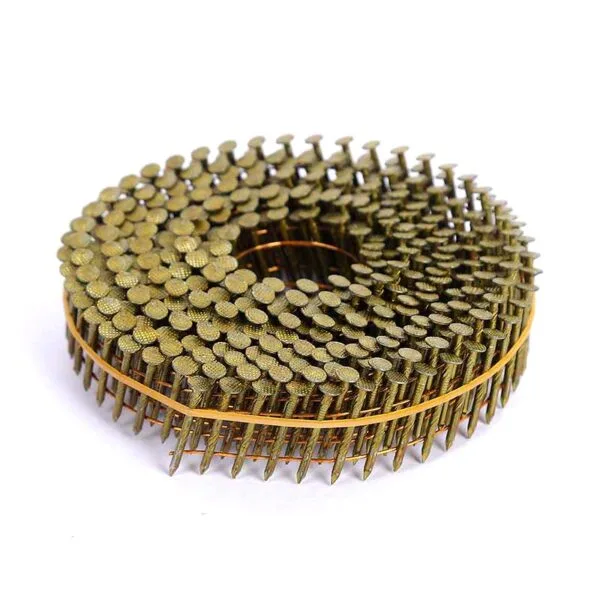
Siding coil nails are joined in a continuous coil, allowing a pneumatic nailer to carry far more fasteners than a typical strip magazine. This format reduces reload interruptions on long exterior runs. Compared with roofing nails, siding fasteners commonly have a smaller head and may be offered in longer lengths, but buyers should not assume the two products are interchangeable.
The application can include wood siding, engineered wood panels, fiber-cement products, cedar shingles, exterior trim, wall sheathing, and fencing. Each material supplier may set different requirements. Always reconcile the nail specification with the current installation manual for the exact siding product and the local building rules.
How to Select Siding Coil Nails
Start with the installed system, not only the nail price. A complete inquiry should identify the siding material and thickness, sheathing type, framing or substrate, exposure environment, specified embedment, nailer model, and desired carton quantity. These details determine whether a proposed fastener is technically suitable.
- Application: wood, engineered wood, fiber cement, trim, sheathing, or another approved material.
- Length and diameter: enough to pass through the cladding and reach the required substrate depth without exceeding the nailer’s range.
- Shank: smooth, ring, or screw, selected for holding needs and material behavior.
- Finish: corrosion protection compatible with the siding, preservative treatment, and climate.
- Collation: angle, wire or plastic format, coil dimensions, and nails per coil.
- Head and point: suitable appearance, drive behavior, and acceptance under the product instructions.
Siding Coil Nails Size and Penetration Guide
There is no universal length for every siding assembly. Common commercial ranges include approximately 1-1/4 to 2-1/2 inches for many siding applications, while some systems need a different length or diameter. The correct value depends on the cladding thickness, any furring or foam layer, sheathing, and the required penetration into framing or another approved base.
Use the following specification logic before ordering:
- Confirm the minimum fastener size in the siding manufacturer’s current installation instructions.
- Add the thickness of all layers the nail must pass through before reaching the structural base.
- Verify the required embedment and whether the assembly permits attachment into sheathing alone.
- Check that the chosen diameter and length are within the nailer’s published range.
- Run a controlled installation test to confirm seating, holding, splitting risk, and surface appearance.
For broader dimensional terminology, compare our coil nail sizes guide. Procurement documents should state both metric and inch dimensions when orders cross markets.
Choosing Material and Finish
Exterior fasteners face moisture, salts, treated lumber chemicals, and dissimilar-material reactions. Reputable guidance for exterior siding generally calls for galvanized or stainless fasteners, but the siding manufacturer remains the controlling source for a particular system. The JLC siding fastener field guide also explains why corrosion protection matters.
| Material or finish | Typical selection context | Buyer check |
|---|---|---|
| Electro-galvanized | Lower-corrosion situations only when permitted | Confirm coating level and application approval |
| Hot-dip galvanized | General exterior exposure where specified | Request the applicable coating standard and test report |
| 304 stainless steel | High corrosion resistance for many exterior uses | Verify alloy grade and material certificate |
| 316 stainless steel | Severe, coastal, or salt-exposed environments when required | Verify grade; do not accept an unsubstantiated “stainless” label |
When selecting siding coil nails for cedar, treated wood, coastal projects, or proprietary panels, check for explicit material restrictions. A cheaper coating can become expensive if corrosion stains the surface, weakens the connection, or affects a product warranty.
Shank, Head, and Point Options
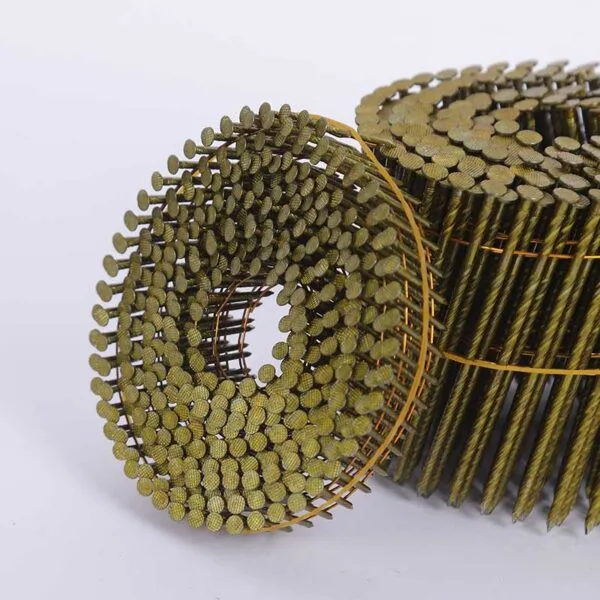
Ring-shank siding coil nails are often selected when higher withdrawal resistance is important. Smooth shanks drive with less resistance and may suit applications where the approved schedule does not demand enhanced withdrawal performance. Screw shanks can be useful in selected wood fastening conditions. Actual performance depends on diameter, material, substrate, and installation quality, so shank style alone is not a complete performance claim.
Head diameter and profile affect bearing area and finished appearance. A head that is too small may not meet the cladding requirement; a head that is too large can be visually intrusive. Diamond points are common, but the point geometry should be evaluated for splitting and drive consistency in the target material.
Nailer and Collation Compatibility
Do not purchase from angle alone. Many siding products use approximately 15-degree wire or plastic collation, while this site’s coated coil nails are offered with a 16-degree specification. Compatibility also depends on wire diameter, head diameter, length range, coil height, feed geometry, and the tool manufacturer’s approved fastener specification.
Before approving siding coil nails, send the supplier the exact nailer brand and model. Ask for a dimensional drawing and a small sample lot. A short production test should check feeding, double-fires, jams, head seating, wire debris, surface damage, and holding performance. If feeding problems occur, consult our coil nail jam troubleshooting guide.
Bulk Buyer Checklist
A clear purchase specification makes supplier comparisons meaningful and reduces disputes. Include these fields when requesting siding coil nails:
- Application and siding manufacturer’s required fastener specification
- Steel or stainless grade and requested coating or finish
- Shank diameter, nail length, head diameter, and point
- Smooth, ring, or screw shank
- Collation material, nominal angle, spacing, and nails per coil
- Compatible nailer models
- Carton count, pallet pattern, labels, and moisture protection
- Dimensional tolerances, inspection method, and acceptance criteria
- Material certificates and relevant coating or corrosion test reports
- Pre-shipment sample and batch traceability requirements
For repeat orders, retain an approved sample and specification sheet. Inspect incoming lots for dimensions, coating consistency, weld or collation integrity, coil shape, packaging damage, and tool performance. Our guide to reading a coil nail specification sheet provides a useful review sequence.
Frequently Asked Questions
What size siding coil nails should I buy?
Use the size required by the siding manufacturer for the exact assembly. Account for cladding, intermediate layers, and required substrate penetration, then verify that the fastener fits the nailer.
Are roofing and siding coil nails interchangeable?
Not automatically. Head size, length, diameter, collation, coating, and tool range can differ. Use a roofing fastener for siding only when both the siding instructions and nailer documentation permit that exact specification.
Should I choose galvanized or stainless steel?
Choose according to the siding material, exposure, treated-wood chemistry, manufacturer instructions, and local requirements. Stainless steel is generally considered for more corrosive exposure; the precise grade still needs verification.
Is ring shank always better?
Ring shank can improve withdrawal resistance, but “better” depends on the approved assembly, substrate, drive quality, and performance requirements. Read our ring-shank versus smooth-shank guide for the procurement trade-offs.
Request a Siding Coil Nails Specification Review
Yi Zhengyu Metal Products supplies coil fasteners for commercial and industrial buyers. Send your siding material, target dimensions, finish, shank style, nailer model, annual volume, and packaging requirements through the contact page. The team can review manufacturability and prepare a sample-based quotation before a bulk order.