


Selecting the correct coil nail size is one of the most critical decisions for B2B buyers in construction, pallet manufacturing, and furniture production. The wrong size means jammed nail guns, structural failures, and wasted budget on incompatible inventory.
Yet many procurement managers discover these problems only after large orders arrive. A nail that looks right on paper may not perform in your specific application. This guide gives you the complete reference to avoid those costly mistakes.
We’ve compiled manufacturer-grade specifications, application-specific recommendations, and practical selection criteria that work for real production environments. Whether you are sourcing for a pallet operation running 24/7 or a furniture assembly line, this guide helps you order with confidence.
Table of Contents
What Are Coil Nails and Why Size Matters
Coil nails are fasteners wound together in a continuous coil format, designed for high-speed pneumatic nail guns. Unlike stick nails, coil nails can hold 100-300 fasteners per strip, dramatically reducing reload time on production lines.
The size of a coil nail affects three critical operational factors:
Holding Power: The relationship between shank diameter, length, and material determines how securely the nail fastens materials together. An undersized nail in structural applications creates failure risks.
Compatibility: Every nail gun model has strict tolerances for shank diameter, length, and collation angle. The wrong size causes jams, misfires, and equipment damage.
Cost Efficiency: Using oversized nails wastes money. Using undersized nails costs more through failure and rework. Optimal sizing maximizes both performance and profit margins.
For businesses purchasing thousands or tens of thousands of nails monthly, size selection directly impacts your bottom line.
Coil Nail Size Chart: Complete Dimensions Reference
This comprehensive chart covers the most commonly used coil nail sizes in industrial applications. All dimensions are provided in both imperial and metric measurements.
| Length (in) | Length (mm) | Shank Diameter (mm) | Approximate Gauge | Common Applications |
|---|---|---|---|---|
| 1-1/4″ | 32 | 2.10 | 13 | Light trim, cabinetry, delicate woodworking |
| 1-1/2″ | 38 | 2.10-2.30 | 12-13 | Trim work, light framing, furniture assembly |
| 1-3/4″ | 45 | 2.30 | 12 | General construction, subflooring, sheathing |
| 2″ | 50 | 2.30-2.50 | 11-12 | Framing, deck boards, light structural work |
| 2-1/4″ | 57 | 2.50 | 11 | Framing, pallet manufacturing, crating |
| 2-1/2″ | 64 | 2.50-2.70 | 10-11 | Framing, pallet collars, structural panels |
| 2-3/4″ | 70 | 2.70 | 10 | Heavy framing, pallet manufacturing, fencing |
| 3″ | 75 | 2.70-2.90 | 9-10 | Heavy framing, pallet manufacture, industrial crating |
| 3-1/4″ | 83 | 2.90 | 9 | Structural framing, heavy pallets, industrial applications |
| 3-1/2″ | 90 | 2.90-3.10 | 8-9 | Heavy structural work, industrial pallets, beam fastening |
| 4″ | 100 | 3.10 | 8 | Heavy industrial applications, beam construction |
| 4-1/4″ | 110 | 3.10-3.30 | 7-8 | Specialty structural applications |
| 5″ | 130 | 3.30 | 7 | Specialty heavy-duty applications |
Note: Wire gauge numbers are inverse to diameter. A lower gauge number indicates a thicker shank. Our specifications at Yizhengyu cover shank diameters from 2.10mm to 3.30mm to serve the full range of industrial applications.
For detailed product specifications, visit our coil nails collection featuring multiple finish options, including galvanized, coated, and bright finishes.
Understanding the Three Key Size Parameters
Shank Diameter (Wire Gauge)
The shank diameter determines the nail’s holding strength and the load it can bear. In North American sizing, wire gauge ranges from 8 gauge (thickest) to 15 gauge (thinnest).
| Wire Gauge | Shank Diameter (mm) | Strength Level | Typical Use |
|---|---|---|---|
| 8 gauge | 3.10-3.30 | Maximum | Heavy structural, industrial pallets |
| 9-10 gauge | 2.70-2.90 | High | Framing, heavy construction |
| 11 gauge | 2.50-2.70 | Medium-High | General construction, pallets |
| 12-13 gauge | 2.10-2.50 | Medium | Trim, cabinetry, light work |
Thicker shanks provide greater withdrawal resistance but require more power to drive and create larger holes. Match your gauge to your application requirements and nail gun specifications.
Nail Length
Length determines how deep the nail penetrates the base material. The general rule is that a nail should penetrate at least two-thirds into the second material layer, or a minimum of 1 inch into wood framing.
For example, when fastening 3/4″ plywood to 2×4 studs, you need at least 1-1/2″ nail length (3/4″ + 1″ = 1-3/4″ minimum). Always account for the compression of materials during fastening.
Longer nails increase holding power but also increase the risk of splitting wood and require more driving force. Balance these factors based on your specific materials.
Collation Angle: 15 Degree vs 16 Degree
The collation angle refers to how the nails are arranged in the coil relative to the strip angle. This specification is critical for tool compatibility.
15-Degree Coil Nails: Angled slightly steeper, compatible with specific manufacturer lines. Common in Paslode, Hitachi, and compatible tools.
16-Degree Coil Nails: The standard angle used by most manufacturers including DeWalt, Porter-Cable, and Makita. This is the most widely compatible specification in the industry.
Yizhengyu produces both angles with our standard 16-degree tilt being the most popular for North American and European markets. Always verify your nail gun’s compatible angle before ordering.
Shank Types and How They Affect Performance
The shank type significantly impacts withdrawal resistance and application suitability.
Smooth Shank
The most common basic design. The smooth cylindrical shaft pulls easily into materials and works well with most nail guns.
Best For: General construction, sheathing, subflooring, temporary fastening, and applications where disassembly may be needed later.
Considerations: Lower holding power compared to deformed shanks. May withdraw under vibration or lateral loads.
Ring Shank
Features circular rings pressed into the shank during manufacturing. Each ring locks into the wood fiber, creating significantly greater withdrawal resistance.
Best For: Pallet manufacturing, decking, fencing, applications subject to vibration or lateral stress. This is our most requested shank type for pallet production operations.
Holding Power: Ring shanks provide 40-60% greater withdrawal resistance than smooth shanks of the same diameter.
Spiral/Threaded Shank
Threads wrap around the shank in a helical pattern, similar to a screw. These provide the highest holding power but require more driving torque.
Best For: Load-bearing structural connections, pressure-treated lumber, hardwoods, and critical structural applications.
Considerations: Higher equipment wear and slower driving speed. Best for applications where maximum holding power is essential.
Explore our high-strength woodworking nails for premium shank options designed for demanding applications.
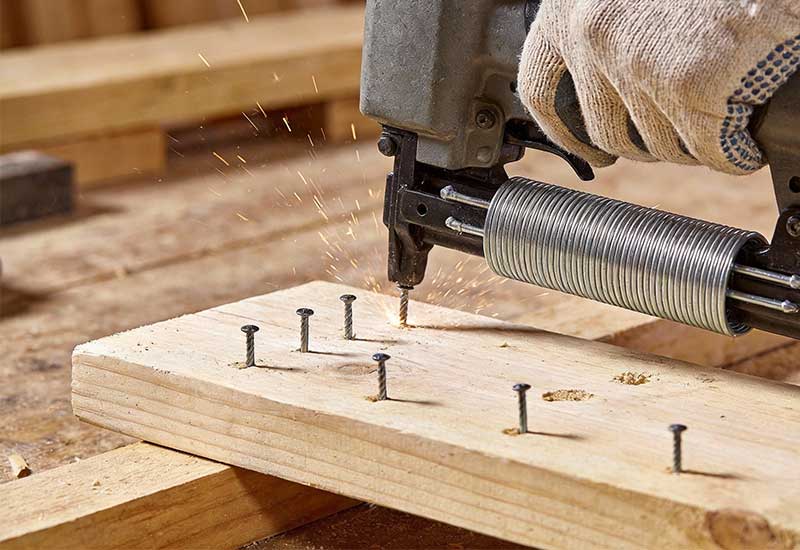
How to Choose the Right Coil Nail Size for Your Application
Selecting the correct size requires matching your specific application requirements to nail specifications. Here are expert recommendations based on industry standards and field experience.
Pallet Manufacturing
Pallet production demands the best balance of driving speed, holding power, and cost efficiency.
Recommended Sizes: 2-3/8″ to 3″ (60-75mm) length with 11-12 gauge diameter
Shank Type: Ring shank for maximum holding power in transport applications
Key Consideration: Pallets face constant vibration during handling and shipping. Ring shanks prevent nail withdrawal that causes load failures and safety hazards.
Our coated coil nails are specifically formulated for pallet applications, providing corrosion resistance while maintaining driving performance.
Roofing
Roofing applications require nails that can secure sheathing and withstand environmental exposure.
Recommended Sizes: 1-3/4″ to 2-1/2″ (45-64mm) length
Shank Type: Smooth or ring shank depending on sheathing material
Key Consideration: Roofing nails must penetrate through shingles and into solid sheathing. Account for multiple shingle layers in your length calculation.
Framing
Structural framing demands high holding power and consistent driving performance.
Recommended Sizes: 3″ to 3-1/2″ (75-90mm) length with 10-11 gauge diameter
Shank Type: Ring or spiral shank for critical structural connections
Key Consideration: Building codes may specify minimum nail sizes for structural applications. Always verify local requirements.
Furniture Assembly
Furniture production prioritizes clean appearance and adequate holding strength for joinery.
Recommended Sizes: 1-1/4″ to 2″ (32-50mm) length with 13-14 gauge diameter
Shank Type: Smooth shank for clean appearance and easier finishing
Key Consideration: Visible nail holes require careful finish matching. Brad-style nails often work best for visible applications.
Fencing and Decking
Outdoor applications require corrosion resistance and strong holding power.
Recommended Sizes: 2-1/2″ to 3-1/4″ (64-83mm) length
Shank Type: Ring shank for resistance to weather-induced movement and vibration
Key Consideration: Pressure-treated lumber requires hot-dip galvanized or coated nails to prevent chemical reaction and premature failure.
Common Mistakes When Selecting Coil Nail Sizes
Mistake 1: Ordering Based on Price Alone
The cheapest nail is often the wrong specification. An undersized nail causes production downtime, equipment damage, and product failures that far exceed any savings.
Solution: Calculate total cost including failure rates, rework time, and customer returns. Often 10-15% more investment in proper specifications saves 50%+ in hidden costs.
Mistake 2: Ignoring Collation Angle Compatibility
Many buyers order based on length and gauge without verifying the collation angle matches their equipment.
Solution: Always confirm your nail gun’s compatible angle (15° or 16°) before ordering. Mixing angles causes severe jamming and potential tool damage.
Mistake 3: Using the Same Size for All Applications
Production lines often standardize on one nail size for simplicity, sacrificing optimal performance for consistency.
Solution: Analyze your actual application requirements. Multiple sizes for different products often improve quality and reduce overall fastening costs.
Mistake 4: Failing to Account for Material Compression
When two materials are fastened together, they compress slightly under clamping pressure.
Solution: Calculate nail penetration into the second material after accounting for 10-15% compression. Always test with actual materials before large orders.
Mistake 5: Neglecting Surface Material Compatibility
Coil nails in chemically treated lumber require appropriate coatings to prevent corrosion and staining.
Solution: Match nail finish to application environment. Pressure-treated lumber requires hot-dip galvanized or specialized coated nails.
For additional guidance, see our comprehensive Wire Coil Nails vs Plastic Coil Nails comparison to understand which collation type works best for your operation.
Coil Nail Size Compatibility with Nail Guns
Nail gun compatibility goes beyond simple size matching. Here are critical factors for ensuring your coil nails work with your equipment.
Tool Specification Matching
Every pneumatic coil nailer has documented specifications including:
- Minimum and maximum nail length
- Acceptable shank diameter range
- Collation angle requirement (15° or 16°)
- Magazine capacity (coil size)
Always reference your tool’s manual for exact specifications. When in doubt, contact the manufacturer or check the tool’s specification sheet.
Common Brand Compatibility
DeWalt, Porter-Cable, Makita: Standard 16-degree compatibility, 2-1/2″ to 3-1/2″ range typically
Paslode: Special 15-degree collation for certain models, check specifications
Senco, Spotnails: Multiple angle options available, verify model requirements
Quality Consistency Matters
Nail manufacturing consistency affects tool performance as much as raw specifications. Low-quality nails with inconsistent diameters cause premature wear and frequent jams even when “specs match.”
Yizhengyu implements strict quality control with dimensional tolerances within 0.02mm, ensuring consistent performance across every coil. Request samples before large orders to verify compatibility with your specific equipment.
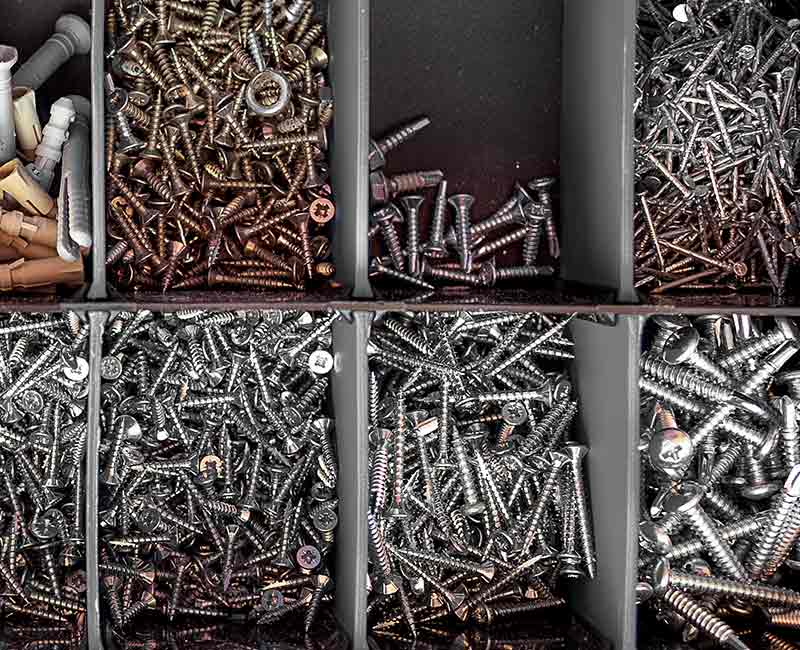
Tips for Bulk Purchasing Coil Nails by Size
Strategic bulk purchasing reduces per-unit cost while ensuring you have the right inventory for production demands.
Right-Sizing Your Order Quantities
Calculate your monthly consumption by application type and size. Most manufacturers offer volume pricing at tiered levels:
- Standard orders: 20-50 boxes
- Bulk orders: 50-200 boxes
- Container orders: 200+ boxes (full 20′ container)
Balance inventory carrying costs against volume discounts. For fast-moving sizes, larger orders reduce per-unit cost. For specialized sizes, smaller frequent orders prevent dead inventory.
Standardization Strategy
Reduce SKUs by standardizing on fewer nail sizes across applications where possible. Three well-chosen sizes often cover 80% of common applications, simplifying purchasing and inventory management.
Lead Time Planning
Standard production lead times run 2-4 weeks plus shipping. Plan orders accordingly:
- Air freight: 1-2 weeks delivery, higher cost
- Sea freight: 4-6 weeks delivery, lower cost
- Buffer stock: Maintain 2-4 weeks of safety inventory
Quality Verification
Always request product samples and specification sheets before container orders. Verify:
- Dimensional accuracy
- Surface finish quality
- Shank consistency
- Driving test results
Yizhengyu provides free samples and detailed specification sheets for all products, ensuring you know exactly what arrives before committing to large orders.
FAQ
What is the most common coil nail size?
The 2-1/2″ to 3″ (64-75mm) length with 11-gauge shank represents the most versatile and commonly used coil nail size. This range handles general construction, pallet manufacturing, and framing applications effectively. For most businesses, stocking these sizes covers the majority of daily requirements.
How do I know what size coil nails my nail gun uses?
Check three things: First, locate your nail gun model number (usually on the tool body or in the manual). Second, look up that model’s specifications on the manufacturer’s website. Third, verify the maximum length, minimum length, shank diameter range, and collation angle. When in doubt, contact the manufacturer directly with your model number.
What does 15 degree mean for coil nails?
The 15-degree angle refers to the collation angle of the nail strip relative to the magazine. This determines how nails are positioned in the coil and magazine. Different nail guns accept specific angles; 15-degree and 16-degree are the two main standards. Using the wrong angle causes severe jamming. Always match your tool’s required angle.
Can I use a different size coil nail than recommended?
Using a different size than your nail gun specifies risks equipment damage and safety hazards. Oversized nails may not fit the magazine or require excessive driving force. Undersized nails may not penetrate properly or provide adequate holding power. Always use nail sizes within your tool’s specified range.
What is the difference between wire gauge and shank diameter?
Wire gauge and shank diameter describe the same measurement using different systems. Wire gauge is a standard number system where higher numbers mean thinner wire (15 gauge is thinner than 8 gauge). Shank diameter uses metric measurements in millimeters. Both describe the nail’s thickness. Converting between systems requires a reference chart like the one provided in this guide.
Ready to Source the Right Coil Nail Sizes?
Understanding coil nail specifications helps you make informed purchasing decisions that reduce costs and improve production quality. Yizhengyu Metal Products supplies industrial-grade coil nails in all standard sizes with consistent quality that keeps your production running smoothly.
Our team provides expert consultation on size selection for your specific applications. We offer free samples, detailed specifications, and competitive bulk pricing for businesses of all sizes.