Drywall screws are among the most widely used fasteners in the construction industry. Every residential renovation, commercial interior project, and industrial building relies on these specialized screws to attach gypsum board to framing. Yet despite their ubiquity, many procurement managers, contractors, and building material distributors struggle with fundamental questions: Which drywall screw size do I actually need? What is the difference between coarse thread and fine thread variants? How do surface treatments affect long-term performance?
The consequences of getting these decisions wrong range from costly callbacks to structural failures. Using wood screws where drywall screws are required, or selecting the wrong gauge for your specific application, creates problems that only surface months after installation.
This guide provides the comprehensive technical reference that B2B buyers need. We cover drywall screw types, sizing systems, material specifications, and selection criteria based on actual application requirements. Whether you are equipping a contracting team, stocking a distribution warehouse, or sourcing for a large-scale construction project, you will find actionable specifications here.
Table of Contents
What Are Drywall Screws?
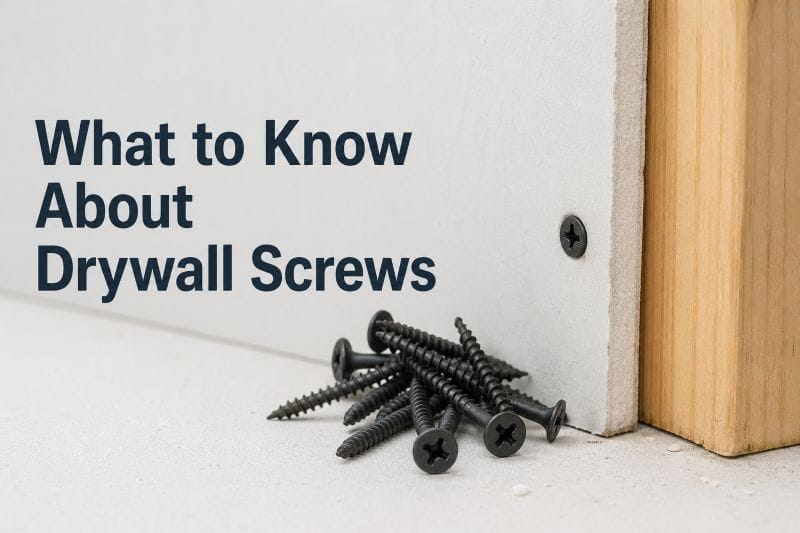
Drywall screws are specialized fasteners designed specifically for attaching drywall (also called sheetrock or gypsum board) to wood or metal framing. They differ fundamentally from general-purpose screws in their design philosophy, material composition, and performance characteristics.
The defining features of drywall screws include:
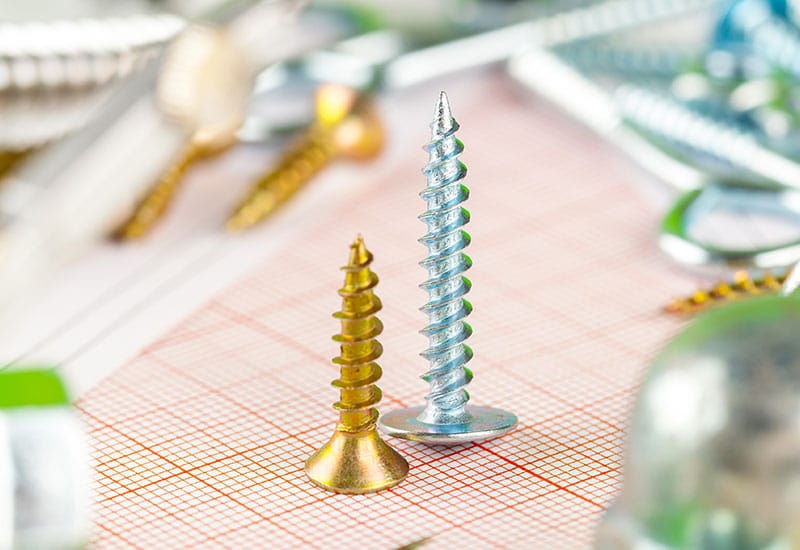
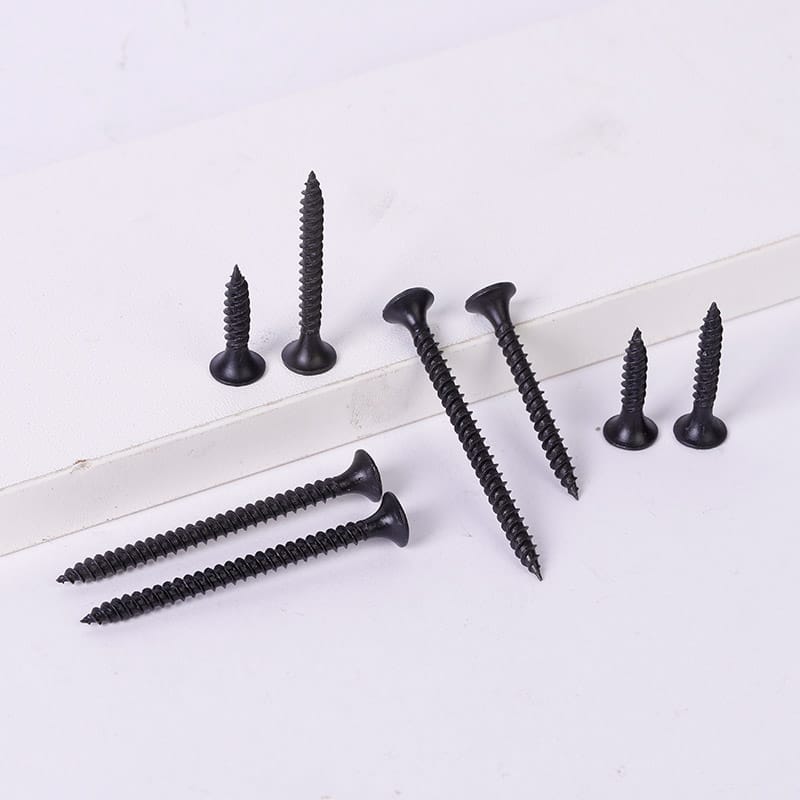
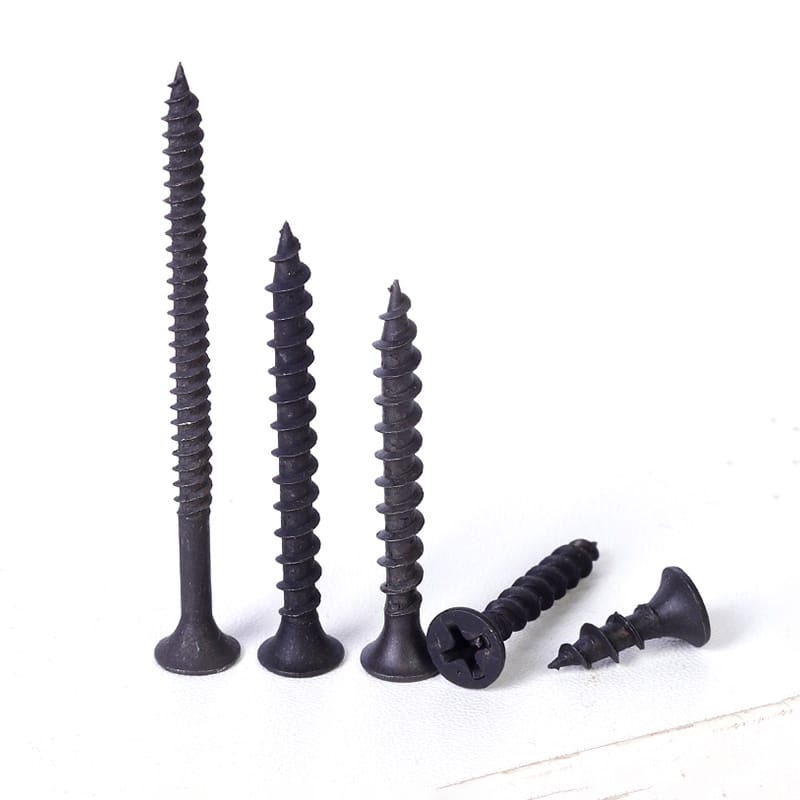
Bugle Head Design: The most distinctive characteristic is the bugle-shaped head. Unlike flat-head or pan-head screws, the bugle head distributes pressure across a wider surface area when countersunk into drywall. This prevents the paper facing from tearing or “dimpling” while creating a smooth surface for finishing compounds.
Self-Tapping Thread: Drywall screws feature aggressive thread patterns that cut into wood fibers or metal studs without requiring pre-drilling in most applications. The threads are optimized for quick penetration and strong holding power.
Phosphate or Zinc Coating: Most drywall screws receive black phosphate or zinc plating to resist corrosion. This coating also acts as a lubricant during installation, reducing torque requirements and preventing binding.
Sharp or Drill Points: Depending on the type, drywall screws terminate in either a sharp point for wood applications or a self-drilling point for metal studs. The point style is one of the primary selection criteria.
Using standard wood screws or generic fasteners for drywall installation creates multiple risks. Wood screws have unthreaded shanks that reduce holding power at the board interface. They lack the bugle head design and risk tearing drywall paper. Their coarse threads and brittle steel also risk snapping when used with metal framing. Drywall screws are engineered specifically for this application, and cutting corners on fastener quality compromises the entire installation.
What to Know About Drywall Screws? Drywall Screw Types Explained
Understanding the different drywall screw types is essential for matching the right fastener to your specific application. The primary distinctions involve thread pattern, material compatibility, and point style.
Coarse Thread Drywall Screws
Coarse thread drywall screws feature wide, deeply spaced threads optimized for wood stud applications. The aggressive thread pitch bites quickly into wood fibers, providing excellent holding power with minimal torque.
These screws are designed for use with wood studs, plywood backing, and other wooden framing materials. The coarse threads create strong pull-out resistance in wood, making them the standard choice for residential wall and ceiling installations.
Key Specifications:
- Thread pitch typically ranges from 8-10 threads per inch
- Available in gauges from #6 to #8
- Length options from 1 inch to 3 inches
- Black phosphate coating for corrosion resistance
Applications: Interior walls with wood studs, ceilings over wood joists, drywall attachment to plywood or OSB backing, renovations where wood framing is present.
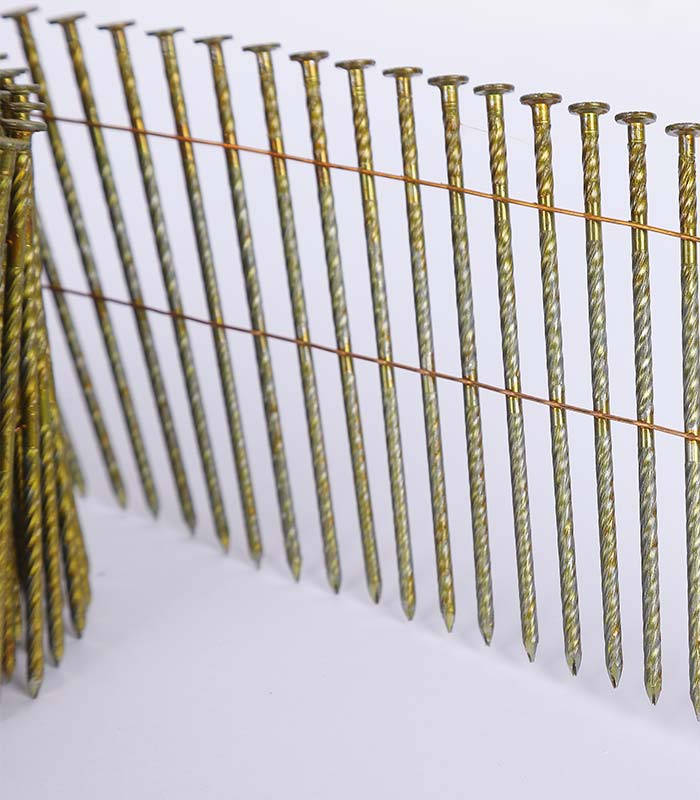
Yizhengyu’s coarse-thread drywall screws feature an optimized thread geometry for rapid installation and reliable holding power in wood-framing applications.
Fine Thread Drywall Screws
Fine thread drywall screws have closely spaced threads designed for metal stud applications. The finer thread pitch prevents the screw from stripping out thin metal studs while maintaining adequate holding power.
The reduced thread depth minimizes the risk of metal shavings and allows the screw to self-thread into pre-punched holes in metal studs without fracturing the material.
Key Specifications:
- Thread pitch typically ranges from 16-20 threads per inch
- Available in gauges from #6 to #10
- Length options from 1 inch to 3 inches
- Fine thread design prevents stud damage
Applications: Commercial interior construction, metal stud framing, steel beam installations, any application involving steel or aluminum framing members.
Self-Drilling Drywall Screws
Self-drilling drywall screws (sometimes called drill point or TEK screws) feature a small drill-style point that allows them to penetrate metal without pre-drilling. These screws combine the thread pattern of drywall screws with the self-tapping fasteners’ drilling capability.
The drill point eliminates the need for separate drilling operations when working with metal framing. This speeds up installation and ensures consistent penetration depth.
Key Specifications:
- Built-in drill point penetrates metal up to 0.100 inches thick
- Available in both coarse and fine thread configurations
- Typically zinc-plated for enhanced corrosion resistance
- Requires appropriate drill speed for optimal drilling performance
Applications: Thick metal studs, steel backing plates, metal plate girders, any metal-to-drywall attachment where pre-drilling is impractical.
Our drywall screw drill tail products combine reliable drill performance with drywall-optimized head design for professional results.
Black Phosphate vs Zinc-Plated Drywall Screws
Surface treatment affects both corrosion resistance and installation performance. The two most common coatings for drywall screws are black phosphate and zinc plating.
Black Phosphate Drywall Screws:
- Matte black appearance
- Moderate corrosion resistance for indoor applications
- Lubricating properties reduce installation torque
- Most common choice for standard drywall installation
- Cost-effective for general-purpose applications
Black phosphate drywall screws provide adequate protection for interior applications where moisture exposure is minimal. The phosphate coating also serves as a dry lubricant, reducing the likelihood of the screw binding during installation.
Explore our black drywall screws for standard interior applications where quality and cost-effectiveness are both priorities.
Zinc-Plated Drywall Screws:
- Bright or yellow zinc appearance
- Superior corrosion resistance compared to phosphate
- Better suited for humid environments or occasional moisture exposure
- Higher initial cost offset by longer service life
- Preferred for bathrooms, kitchens, and basements
For applications requiring enhanced moisture resistance, zinc-plated variants provide better long-term protection. The decision between phosphate and zinc plating should consider the environment, expected service life, and total cost of ownership.
Drywall Screw Sizes: Complete Chart and Dimensions
Selecting the correct drywall screw size requires understanding both the gauge (diameter) and length specifications. The gauge system uses a numerical scale where larger numbers indicate thinner screws.
Understanding Drywall Screw Gauge
The gauge number in drywall screw sizing follows a counterintuitive convention: higher gauge numbers mean thinner screws. A #6 screw has a larger diameter than a #8 screw, and a #10 screw is thinner still.
Common Drywall Screw Gauges:
| Gauge | Shank Diameter (mm) | Shank Diameter (in) | Typical Applications |
|---|---|---|---|
| #6 | 3.50 | 0.138 | Standard drywall, light applications |
| #8 | 4.20 | 0.165 | Most common gauge, general drywall |
| #10 | 4.80 | 0.190 | Heavy drywall, multi-layer, ceilings |
| #12 | 5.40 | 0.216 | Specialty heavy-duty applications |
The #8 gauge represents the most versatile option for general drywall installation, providing adequate strength without excessive material cost. For thicker drywall or ceiling applications, upgrading to #10 gauge improves holding power and reduces risk of fastener failure under load.
Drywall Screw Length Chart
Length selection depends on the drywall thickness plus adequate penetration into the framing member. The standard rule is that screws should penetrate at least 5/8 inch into wood studs or at least 3/8 inch through metal studs.
Standard Length Recommendations:
| Drywall Thickness | Minimum Screw Length | Recommended Length | Framing Type |
|---|---|---|---|
| 1/4 inch | 1-1/4 inch | 1-1/4 inch | Wood or Metal |
| 3/8 inch | 1-3/8 inch | 1-5/8 inch | Wood or Metal |
| 1/2 inch | 1-5/8 inch | 1-5/8 to 2 inch | Wood or Metal |
| 5/8 inch | 2 inch | 2 to 2-1/2 inch | Wood or Metal |
| 3/4 inch | 2-1/2 inch | 2-1/2 to 3 inch | Wood or Metal |
For multi-layer installations, the lower layer is typically attached with shorter screws that penetrate just into the framing, while the finishing layer uses longer screws that penetrate through both layers and into the framing.
The PH2 bugle head drywall screw from Yizhengyu represents our most popular specification, available in multiple lengths to match standard drywall thicknesses.
Thread Count (TPI) Specifications
TPI (Threads Per Inch) is a critical specification that determines how many thread crests engage with the material per linear inch. Higher TPI means finer threads.
Typical TPI by Application:
- Coarse Thread: 8-10 TPI — Wood studs, softwoods, plywood
- Medium Thread: 12-14 TPI — Mixed applications
- Fine Thread: 16-20 TPI — Metal studs, hardwood applications
The thread pitch must match your framing material. Using coarse thread screws in metal studs risks cross-threading and reduced holding power. Fine thread screws in wood studs may not engage sufficiently, leading to stripped connections.
Key Design Features That Matter
Beyond basic type and size selection, several design features significantly impact installation quality and long-term performance.
Bugle Head Design
The bugle head is the defining characteristic of drywall screws, and understanding why this shape is used clarifies much about the fastener’s purpose.
A flat-head screw concentrates driving force on a small center point, which easily punches through drywall paper. A pan head sits above the surface and creates an uneven finishing surface. The bugle head distributes pressure across a gradual curve that pulls the screw flush without tearing the paper facing.
This design serves both structural and aesthetic purposes. The paper facing provides most of drywall’s structural integrity; a torn face compromises the entire panel. The smooth, flush finish also reduces the amount of joint compound needed for finishing.
Thread Pitch (TPI) and Performance
Thread pitch directly affects how the screw engages with the substrate material. Each thread represents a point of contact and resistance against pull-out force.
For wood studs, coarse threads with 8-10 TPI provide maximum surface area for wood fiber engagement. The aggressive pitch bites deeply into the wood grain, creating strong resistance against pull-out.
For metal studs, fine threads with 16-20 TPI engage with more thread contacts across the thinner metal surface. The reduced pitch prevents the screw from tearing through the stud material.
Matching TPI to your substrate is not optional for quality installation. A coarse-thread screw driven into metal studs creates metal shavings, potential strip-outs, and reduced holding capacity.
Phillips Drive (PH2) Standard
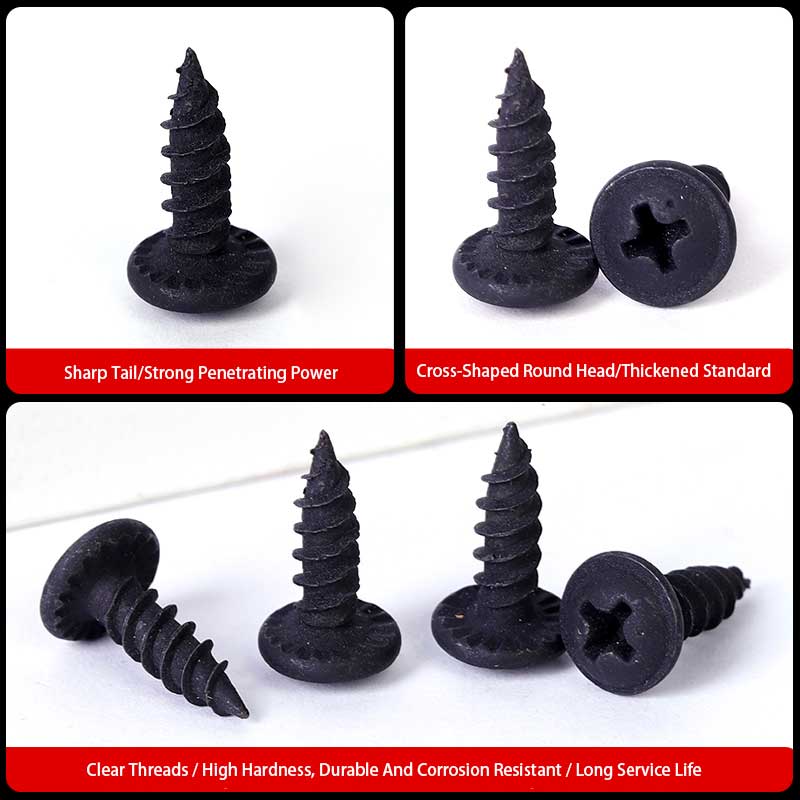
The PH2 Phillips drive is the dominant drive style for drywall screws in North American and international markets. The cross-shaped recess accepts standard Phillips driver bits and provides several practical advantages:
- Self-centering during initial engagement
- Resistance to driver cam-out at high torque
- Wide availability of replacement bits
- Suitable for both manual and powered driving
The PH2 designation indicates a specific recess size compatible with #8 and #10 gauge drywall screws. Using the correct bit size prevents damage to the screw head and ensures consistent driving depth.
Sharp Point vs Drill Point
The point style determines how the screw initiates entry into the substrate.
Sharp Point: Designed for wood applications. The needle-like point penetrates wood fibers cleanly without requiring pre-drilling. The screw essentially cuts its own path through the wood.
Drill Point (Self-Drilling): Features a small flat tip with fluted cutting edges. As the screw rotates, the drill point creates a pilot hole in metal studs before the threads engage. This eliminates the need for separate drilling operations.
For metal stud applications, always specify drill-point screws. Sharp-point screws driven into metal studs risk damaging the thin material, creating safety hazards from metal shavings, and may not achieve adequate penetration depth.
Drywall Screws vs Wood Screws: Key Differences
Using wood screws for drywall installation or vice versa creates problems that compromise both the fastener and the joined materials. Understanding the differences prevents costly mistakes.
| Feature | Drywall Screws | Wood Screws |
|---|---|---|
| Head Style | Bugle head for flush countersink | Flat, pan, or oval head |
| Thread Pattern | Uniform thread along full length | Variable pitch, often tapered |
| Shank | Fully threaded | Often partially threaded |
| Material | Hardened steel, brittle | Softer steel, more ductile |
| Point | Sharp or drill point | Requires pilot hole typically |
| Strength | Shear strength prioritized | Tensile strength prioritized |
| Coating | Phosphate or zinc | Plain, zinc, or lacquer |
| Application | Drywall to wood/metal framing | Wood-to-wood joining |
| Flexibility | Brittle, snaps under bending | More flexible, bends rather than breaks |
The unthreaded shank on many wood screws reduces holding power at the drywall interface, which is precisely where maximum resistance to pull-out is needed. Drywall screws are fully threaded specifically to maximize holding power at this critical junction.
Using wood screws for drywall installation is a false economy. The reduced holding power leads to popped screws over time, and the lack of bugle head design guarantees torn drywall paper.
Drywall Screws vs Self-Drilling Screws
Self-drilling screws (commonly called TEK screws) and drywall screws serve overlapping but distinct purposes. Understanding when each applies prevents specification errors.
Similarities:
- Both feature self-tapping thread patterns
- Both include bugle or similar head styles in construction variants
- Both can attach to metal substrates
Differences:
- Self-drilling screws have significantly thicker shanks and heavier gauge construction
- TEK screws feature integral drill points designed for heavy steel connections
- Drywall screws are optimized for thin gypsum board attachment
- Self-drilling screws handle thicker materials (up to 1/4 inch steel or more)
For drywall attachment to metal studs, fine-thread drywall screws with drill points provide the right balance. They are engineered specifically for the thin-gauge metal used in typical steel stud framing.
For connecting steel plates, attaching drywall to structural steel beams, or any application involving thick metal, genuine self-drilling TEK screws with appropriate gauge and coating are the correct specification.
How to Choose the Right Drywall Screw
Systematic selection based on application parameters prevents specification errors. Follow this decision framework for consistent results.
Step 1: Identify Your Framing Material
The substrate material is the primary determinant of thread type:
- Wood studs: Specify coarse thread drywall screws
- Metal studs: Specify fine thread drywall screws
- Mixed framing: Stock both variants
Step 2: Determine Required Gauge
Gauge selection depends on load requirements and drywall thickness:
- Standard 1/2 inch drywall on walls: #8 gauge handles typical loads
- 5/8 inch or thicker drywall: Consider #10 gauge for additional strength
- Ceiling applications: #10 gauge provides better pull-out resistance
Step 3: Calculate Minimum Length
Minimum length = drywall thickness + penetration depth:
- Into wood studs: Minimum 5/8 inch penetration
- Through metal studs: Minimum 3/8 inch penetration beyond stud
Round up to the nearest standard length available.
Step 4: Select Appropriate Coating
Consider the environment:
- Interior, controlled humidity: Black phosphate is adequate
- Bathrooms, kitchens, basements: Zinc-plated for moisture resistance
- Exterior soffits or high humidity: Consult manufacturer for specific recommendations
Application-Specific Recommendations
Residential Interior Walls: 1/2 inch drywall on wood studs — #8 coarse thread, 1-5/8 inch length, black phosphate
Commercial Ceilings: 5/8 inch drywall on metal studs — #10 fine thread, 1-5/8 to 2 inch length, zinc-plated
Multi-Layer Installation (2 layers): First layer — shorter screw just into framing; Second layer — longer screw through both layers
Bathroom Wet Locations: Standard drywall — #8 fine thread, zinc-plated, minimum 1-5/8 inch length
Drywall Screw Installation Best Practices
Proper installation technique maximizes holding power and prevents callbacks. Understanding how to install drywall screws correctly is essential for both professional contractors and maintenance crews. These guidelines cover the industry-standard approach to achieving secure, professional-quality drywall attachment.
Drywall Screw Spacing Standards
Correct fastener spacing prevents sagging, popping, and structural issues. Proper drywall screw spacing ensures even load distribution and prevents stress concentrations that lead to failure over time.
Wall Field Spacing: Fasteners should be placed 12 inches apart in the field (center area) of each drywall sheet.
Wall Edge Spacing: Fasteners should be placed 8 inches apart along edges and where sheets meet.
Ceiling Spacing: Ceiling applications require closer spacing due to gravity loads. Standard spacing is 12 inches on-center for field and 8 inches on edges.
Corner Beads and Trim: Secure trim and corner beads at 12-inch intervals, avoiding placing screws within 1/2 inch of sheet edges.
Depth Control
The screw head should seat flush with the drywall surface without breaking the paper facing. The goal is:
- Flush seating: Head just below surface plane
- No torn paper: Paper should dimple slightly but remain intact
- No overdriving: Screw should not sink below surface or spin freely
Depth control requires appropriate bit selection and correct clutch settings on power drivers. Test on scrap material before beginning production work.
Common Installation Errors
Overdriving: Driving screws too deep breaks the paper facing and compromises holding power. Set clutch torque appropriately and use depth-stop attachments when available.
Underdriving: Screws not fully seated create bumps in finished walls. Check each fastener after driving.
Insufficient Penetration: Screws that do not fully engage framing create weak points. Verify depth on first few installations.
Wrong Thread Type: Using coarse thread in metal studs creates metal shavings and poor connections. Always match thread to substrate.
Excessive Spacing: Gaps between fasteners create weak zones prone to cracking. Measure and mark framing locations before sheet installation.
Bulk Purchasing Guide for B2B Buyers
Sourcing drywall screws for commercial projects or distribution requires attention to quantity considerations, quality verification, and supply chain factors that differ from retail purchasing.
Minimum Order Quantities
Manufacturer relationships typically offer better pricing for volume orders:
- Standard Bulk: 1,000 to 5,000 screws — suitable for small contractors
- Project Quantities: 5,000 to 25,000 screws — typical for residential construction
- Distribution Stock: 25,000+ screws — warehouse distribution or large projects
Yizhengyu offers competitive pricing across volume tiers and can accommodate both stock orders and call-off arrangements for ongoing project needs. Contact our sales team to discuss bulk drywall screws pricing for your specific requirements.
Surface Treatment Selection
For distribution inventory, stocking multiple coating options ensures you can fulfill diverse customer requirements:
- Black Phosphate: 60-70% of typical orders
- Zinc-Plated: 20-30% of orders, growing share
- Other Coatings: Specialty applications, typically 5-10%
Packaging Options
Commercial packaging affects both storage and end-user experience:
- Bulk Boxes: 25-50 pounds per box, most common for contractors
- Strip Packaging: Pre-loaded collated strips for automatic feed tools
- Small Retail Packs: 50-100 count, for hardware store distribution
- Custom Packaging: Branded options available for major distributors
Quality Verification Points
Before accepting bulk orders, verify these specifications:
- Dimensional Accuracy: Gauge and length within tolerance
- Coating Thickness: Adequate coverage for stated corrosion protection
- Hardness: Properly hardened for driving without shattering
- Head Formation: Consistent bugle shape without defects
- Thread Quality: Clean, consistent thread form without burrs
Request material certifications and test reports from your supplier. Reputable manufacturers provide Certificates of Analysis confirming mechanical properties and coating specifications.
OEM and Custom Specifications
For private label distribution or specialized applications, Yizhengyu offers OEM capabilities:
- Custom head markings or branding
- Non-standard lengths or gauges
- Special coatings for industrial applications
- Proprietary packaging and labeling
Discuss your requirements with our technical sales team to explore customization options for your specific market position.
FAQ
What size drywall screws do I need for 1/2 inch drywall?
For 1/2 inch drywall attached to wood studs, use #8 gauge screws that are 1-5/8 inches long. This length provides 5/8 inch penetration into the wood plus the 1/2 inch board thickness. For metal studs, #8 gauge fine thread screws of the same 1-5/8 inch length work well, though 1-3/8 inch may suffice with metal framing.
Can I use drywall screws for wood projects?
While drywall screws can physically hold wood pieces together, they are not ideal for most wood-to-wood applications. Drywall screws are brittle and may snap under lateral stress. Wood screws offer greater flexibility and pull-out resistance for wood joinery. Reserve drywall screws for their intended purpose of attaching drywall to framing.
What is the difference between coarse and fine thread drywall screws?
Coarse thread drywall screws have wide, deeply spaced threads (8-10 TPI) designed for wood studs. Fine thread drywall screws have closely spaced threads (16-20 TPI) designed for metal studs. Using coarse thread in metal risks cross-threading; using fine thread in wood reduces holding power. Always match thread type to your framing material.
Why do drywall screws have a bugle head?
The bugle head distributes driving pressure across a wider surface area than flat-head screws, preventing drywall paper from tearing during installation. This creates a smooth, flush surface for finishing compounds. The design also reduces the likelihood of the screw pulling through or dimpling the drywall surface.
How many drywall screws do I need per sheet?
A standard 4×8 foot drywall sheet typically requires 32 to 48 screws, depending on spacing. With 12-inch field spacing and 8-inch edge spacing, expect approximately 32-36 fasteners per sheet. Ceiling installations may require more due to closer spacing for gravity loads. Always err on the side of more fasteners rather than too few.
Are black phosphate drywall screws rust-resistant?
Black phosphate provides moderate corrosion resistance suitable for interior applications in controlled humidity environments. The coating is not fully waterproof but resists surface oxidation adequately for typical indoor use. For humid environments like bathrooms or basements, zinc-plated screws offer superior moisture resistance. Evaluate your specific environment before selecting coating type.
What does TPI mean for drywall screws?
TPI stands for Threads Per Inch, indicating how many complete thread crests appear along one inch of the screw shank. Higher TPI means finer threads. For drywall screws, typical coarse thread options run 8-10 TPI, while fine thread options run 16-20 TPI. Match TPI to your substrate material for optimal holding power.
Can drywall screws be used for metal studs?
Yes, but only if you specify fine thread drywall screws with drill points. Standard coarse thread drywall screws are designed for wood studs and will not perform properly in metal framing. Fine thread drywall screws engage metal studs effectively without cross-threading. Verify your screw specification matches your framing material.
Source Quality Drywall Screws from Yizhengyu
Yizhengyu Metal Products Co., Ltd. is a professional drywall screw manufacturer with decades of experience producing fasteners for commercial, residential, and industrial applications. Our production facilities maintain strict quality controls ensuring consistent dimensional accuracy, proper surface treatment, and reliable mechanical properties across every batch.