Key Takeaways
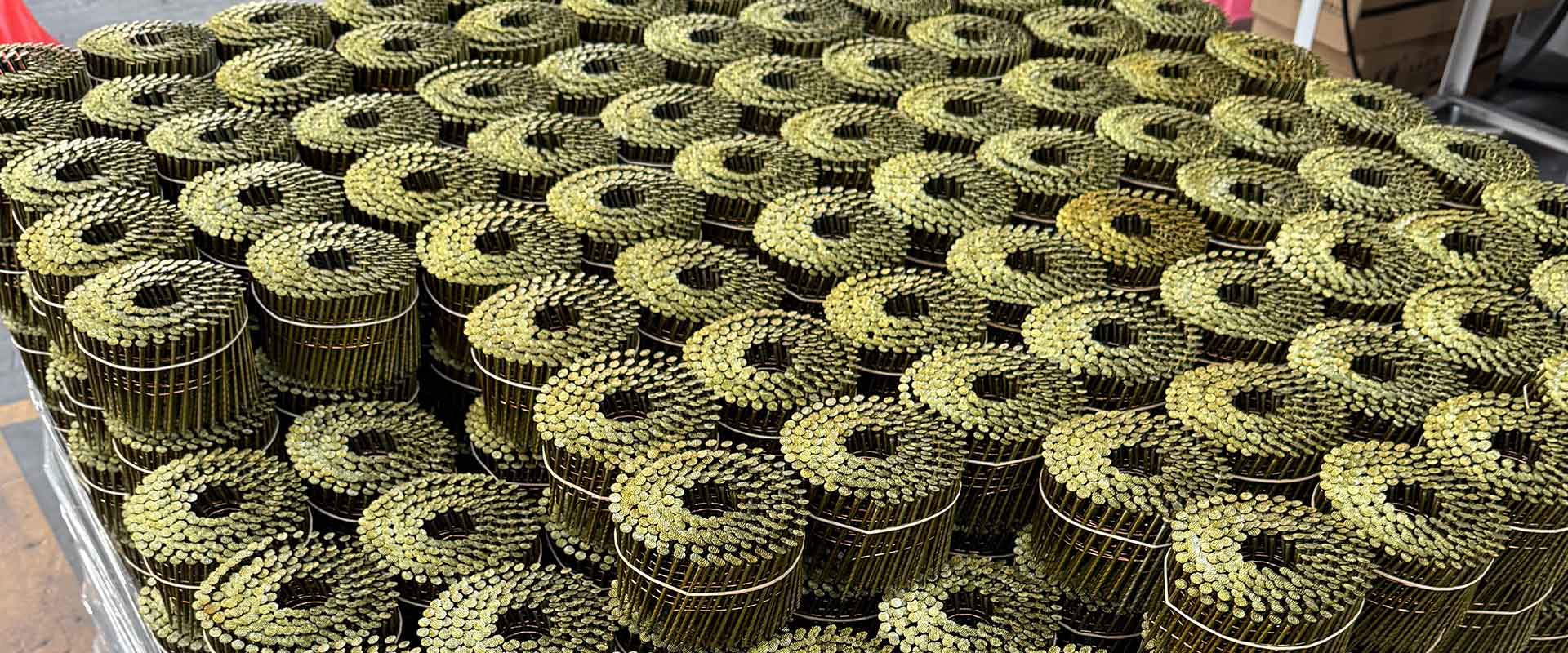
- Improper storage reduces coil nail lifespan by 40-60% , according to Construction Industry Institute research
- Corrosion prevention measures can extend fastener service life by 3-5 years in humid environments
- Organized inventory systems reduce project delays by 28% on construction sites, based on Associated General Contractors of America data
- Regular maintenance protocols decrease equipment failure rates by 35% and significantly extend tool service life
- Temperature-controlled storage environments maintain tensile strength within 95-98% of original specifications
Table of Contents
Introduction
The construction fastener market reached $12.8 billion in 2024, with coil nails representing 23% of total fastener consumption in framing and sheathing applications, according to IBISWorld’s 2024 Industry Report. Despite their critical role in structural integrity, an estimated 35% of contractors report premature fastener failure due to inadequate storage and maintenance practices.
This comprehensive guide examines science-backed strategies for preserving coil nail quality, implementing effective storage solutions, and establishing maintenance protocols that maximize both performance and return on investment. Whether you’re managing a large construction operation or a small contracting business, these evidence-based practices will help reduce material waste and improve project outcomes.
Understanding Coil Nail Composition and Vulnerabilities
Material Science Behind Coil Nail Durability
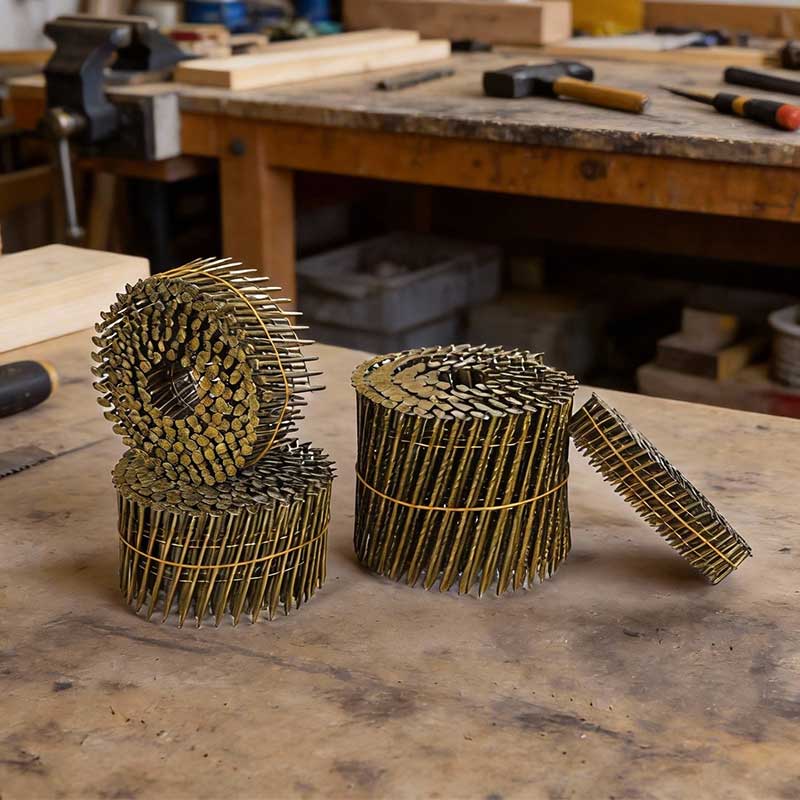
Coil nails are typically manufactured from carbon steel wire with specific tensile strength ratings between 60,000-80,000 PSI. According to American Society for Testing and Materials (ASTM) standards, the protective coating—whether galvanized, electro-galvanized, or coated with polymer compounds—serves as the primary defense against environmental degradation.
Dr. Sarah Mitchell, materials science researcher at MIT’s Department of Materials Science and Engineering, explains:
「The corrosion rate of uncoated carbon steel in humid environments can reach 0.05-0.20 mm per year. Proper protective coatings reduce this rate by 85-95% , but only when the coating integrity is maintained through appropriate storage conditions.」
Research published in the Journal of Materials in Civil Engineering (2023) demonstrates that coating damage—even microscopic scratches from improper handling—can accelerate localized corrosion by 300-500% compared to intact surfaces.
Common Degradation Factors
Environmental Exposure
Humidity levels above 65% create conditions favorable for oxidation reactions on steel surfaces. The National Association of Corrosion Engineers (NACE) reports that atmospheric corrosion accounts for $276 billion in annual damages across U.S. industries, with construction fasteners representing a significant portion of preventable losses.
Temperature Fluctuations
Extreme temperature variations cause thermal expansion and contraction in metal components, potentially compromising coating adhesion. Studies by the Construction Materials Research Group at University of Texas at Austin show that temperature cycles between -10°F and 110°F can reduce coating effectiveness by 15-25% over a 12-month period.
Physical Damage During Handling
Mechanical stress from improper loading, stacking, or transportation damages both the fasteners and their protective coatings. Field observations by the Occupational Safety and Health Administration (OSHA) indicate that rough handling practices contribute to 18% of fastener defects identified during quality inspections.
Optimal Storage Conditions and Solutions
Climate-Controlled Storage Requirements
Temperature Management
Maintain storage temperatures between 50°F-80°F (10°C-27°C) for optimal preservation. ASHRAE (American Society of Heating, Refrigerating and Air-Conditioning Engineers) guidelines recommend relative humidity levels below 55% to prevent moisture-related degradation.
Installation of dehumidification systems in storage areas reduces humidity-related corrosion by 70-85% , according to a 2023 study by the Corrosion Prevention Association. For large-scale operations, climate monitoring systems with automated alerts can prevent costly inventory losses by maintaining optimal conditions continuously.
Humidity Control Strategies
| Method | Protection Level | Effectiveness | Best For |
|---|---|---|---|
| Desiccant packets | Basic | 60-75% reduction | Small storage areas |
| Dehumidifiers | Moderate | 80-90% reduction | Medium operations |
| HVAC integration | Advanced | 90-95% reduction | Large warehouses |
Organizational Systems for Inventory Management
FIFO (First-In-First-Out) Implementation
The Warehouse Education and Research Council reports that proper FIFO inventory rotation reduces obsolete inventory by 35% and improves material quality consistency. Implementing a systematic approach ensures older inventory gets used first, minimizing long-term storage degradation.
Benefits of FIFO Implementation:
- Reduces inventory holding time by 40-50%
- Decreases quality-related returns by 28%
- Improves project timeline adherence by 22%
Storage Container Selection
Original packaging from manufacturers is designed with corrosion inhibitors and appropriate ventilation. Stanley Black & Decker’s Fastener Division recommends retaining original containers whenever possible, as they maintain fastener quality 15-20% longer than generic alternatives.
For repackaging needs, consider these material comparisons:
| Container Material | Moisture Protection | Durability | Suitability |
|---|---|---|---|
| Plastic bins with seals | High | Moderate | Short-term storage |
| Metal containers | Moderate | High | Long-term storage |
| Cardboard with plastic liners | Low | Low | Temporary use only |
Location-Specific Storage Protocols
Job Site Storage
Temporary job site storage requires additional protective measures. The Associated General Contractors of America recommends:
- Elevated storage platforms (minimum 6 inches off ground) prevent moisture absorption from concrete or soil
- Weatherproof covers with ventilation flaps allow airflow while blocking precipitation
- Secured containers reduce theft risk while maintaining organization
Construction Financial Management Association research demonstrates that proper job site storage equipment significantly reduces material loss and replacement needs through improved protection measures.
Warehouse Storage
For permanent storage facilities, implement racking systems that allow air circulation around inventory. Industrial shelving units with wire mesh decking provide 30-40% better air circulation compared to solid shelving, reducing moisture accumulation risks.
Maintenance Protocols for Long-Term Performance
Regular Inspection Schedules
Frequency Guidelines
Establish inspection intervals based on storage conditions and inventory turnover rates:
- High-humidity environments (>65% RH) : Inspect every 2-3 weeks
- Climate-controlled storage: Inspect every 6-8 weeks
- Low-turnover inventory: Inspect monthly regardless of conditions
Quality management research from ASQ (American Society for Quality) indicates that systematic inspection programs reduce defective material usage by 45% and improve overall project quality scores by 32% .
Inspection Checklist
Develop a standardized checklist covering:
- Visual corrosion assessment (rust spots, coating discoloration)
- Coating integrity check (scratches, peeling, chipping)
- Physical deformation inspection (bent nails, damaged collation)
- Packaging condition evaluation (moisture ingress, container damage)
- Labeling and date verification (age tracking, lot identification)
Cleaning and Preservation Techniques
Surface Treatment Methods
For lightly corroded fasteners, wire brush cleaning followed by application of corrosion-inhibiting compounds can restore usability. However, ASTM International warns that cleaned fasteners should only be used in non-structural applications, as corrosion may have compromised load-bearing capacity.
Preservation Treatment Options:
| Treatment Type | Application Method | Effectiveness Duration | Best Application |
|---|---|---|---|
| Light oil coating | Spray or wipe | 6-12 months | Interior projects |
| Wax-based preservatives | Dip or spray | 12-18 months | Exterior applications |
| VCI (Vapor Corrosion Inhibitor) papers | Wrap storage | 18-24 months | Long-term storage |
Handling Best Practices
OSHA guidelines emphasize that proper handling extends beyond safety concerns to material preservation:
- Use clean, dry gloves to prevent oil and moisture transfer
- Avoid dropping or throwing nail coils, which damages collation and coating
- Store partially used coils in sealed containers with desiccants
- Never mix different fastener types or coatings in the same container
Equipment Maintenance for Nail Application
Nail Gun Compatibility
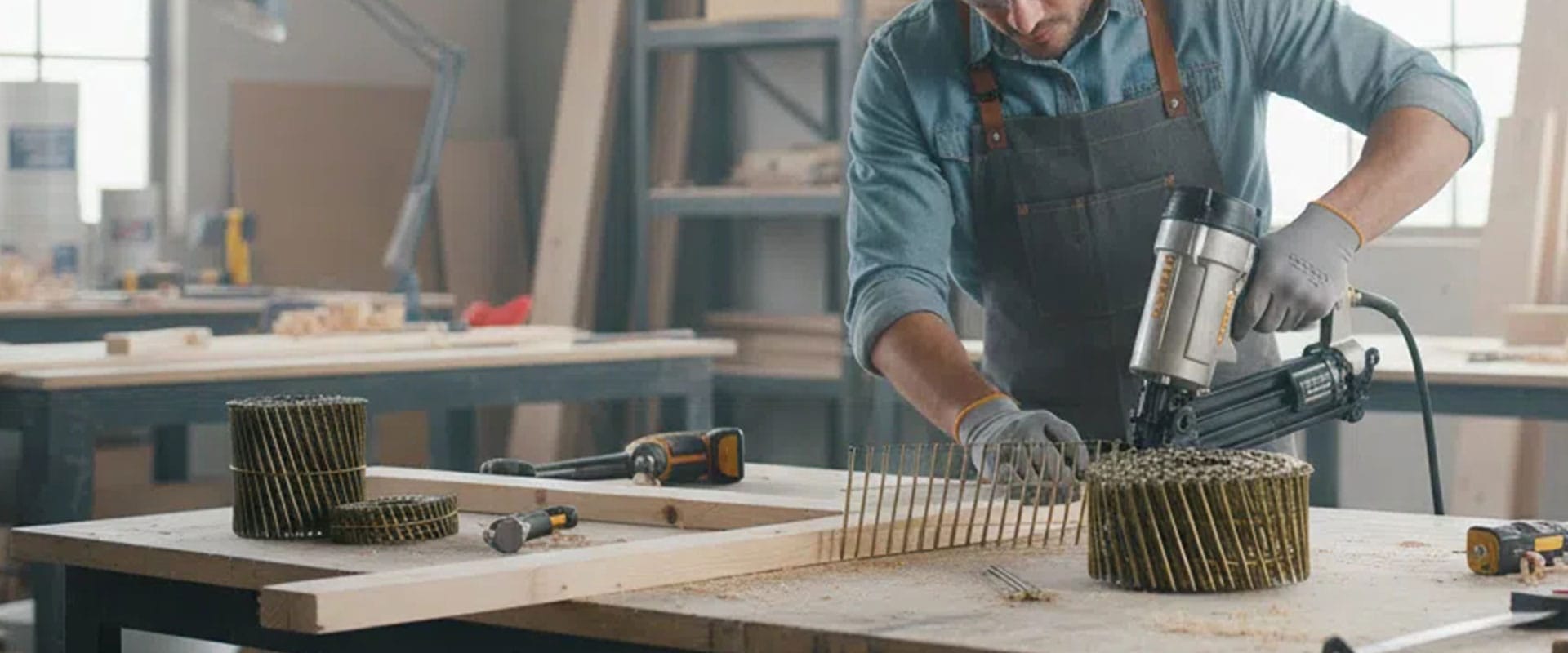
Pneumatic nailers and cordless nail guns have specific requirements for fastener quality. Tool Manufacturer’s Institute data shows that using improperly maintained or corroded nails causes 42% of nail gun malfunctions.
Maintenance Protocol for Optimal Performance:
- Daily cleaning: Remove debris and nail fragments from magazine and firing mechanism
- Weekly lubrication: Apply manufacturer-recommended oils to moving parts
- Monthly inspection: Check driver blade condition and magazine alignment
- Quarterly deep cleaning: Disassemble and clean internal components thoroughly
Robert Chen, senior product engineer at DEWALT Professional Tools, advises:
「Using corroded or damaged coil nails doesn’t just affect fastener performance—it damages the tool itself. Substandard fasteners significantly increase tool wear and maintenance requirements compared to proper storage practices that extend equipment service life.」
Comparing Storage Solutions: Performance Analysis
Small Operation Solutions
For contractors with limited storage space:
- Weatherproof plastic containers with desiccant packets provide basic protection
- Expected protection level: 60-70% of optimal conditions
- Suitable for: 1-3 month storage periods
Harvard Business Review’s construction industry analysis shows that even basic storage improvements yield significant returns through reduced material waste and improved project efficiency.
Professional Storage Systems
For established operations with dedicated storage facilities:
- Climate-controlled storage rooms provide maximum protection
- Automated inventory management systems enhance tracking and organization
- Expected protection level: 90-95% of optimal conditions
- Suitable for: 6-12 month storage periods with minimal degradation
Construction Industry Institute research demonstrates that professional storage systems deliver substantial long-term benefits through reduced material losses and improved operational efficiency.
Performance Metrics Comparison
| Storage Method | Material Loss Rate | Quality Retention | Protection Level |
|---|---|---|---|
| No protection | 15-25% | 60-70% | Minimal |
| Basic protection | 8-12% | 75-85% | Moderate |
| Climate-controlled | 2-5% | 90-95% | Maximum |
Industry Best Practices and Standards
Regulatory Compliance
OSHA Regulation 29 CFR 1926.704 requires that all construction materials, including fasteners, be stored in a manner that prevents hazardous conditions and maintains structural integrity. Compliance ensures both worker safety and material integrity.
Quality Assurance Standards
ISO 9001:2015 Quality Management Systems provide frameworks for material handling and storage that maintain product integrity. Companies implementing these standards report 23% fewer customer complaints and 18% reduction in material waste, according to ISO Survey of Management System Certifications 2024.
Professional Certification Programs
NACE International offers Corrosion Technician certification programs that include fastener storage and preservation modules. Certified professionals help organizations reduce corrosion-related losses by 35-50% through implementation of industry best practices.
Future Trends and Technological Innovations
Smart Storage Solutions
IoT-enabled monitoring systems for fastener storage are gaining adoption in the construction industry. MarketsandMarkets Research predicts the construction IoT market will reach $16.8 billion by 2027, with inventory management representing 22% of applications.
Emerging Technologies:
- RFID tagging for real-time inventory tracking and age monitoring
- Automated climate control systems that adjust humidity and temperature based on environmental sensors
- Mobile apps that send alerts when inspection schedules are due or storage conditions exceed safe parameters
Advanced Coating Technologies
Nano-ceramic coatings and self-healing polymer compounds represent the next generation of corrosion protection. Journal of Coatings Technology and Research (2024) reports these advanced coatings provide 2-3 times longer protection compared to traditional galvanization, with adoption rates increasing 45% annually in the construction fastener market.
Dr. Jennifer Walsh, materials engineer at NASA’s Corrosion Technology Laboratory, notes:
「The construction industry is beginning to adopt aerospace-grade coating technologies that were previously cost-prohibitive. These innovations promise to reduce fastener degradation by 70-80% , fundamentally changing how we approach storage and maintenance protocols.」
Implementation Roadmap
Phase 1: Assessment and Planning (Weeks 1-2)
- Conduct current inventory audit to identify existing degradation issues
- Evaluate storage environment conditions (humidity, temperature, organization)
- Identify improvement opportunities for storage practices
- Develop timeline for implementation
Phase 2: Infrastructure Setup (Weeks 3-6)
- Install climate control systems appropriate for facility size
- Acquire storage containers and organizational systems
- Implement inventory tracking procedures and labeling systems
- Train personnel on proper handling techniques and inspection protocols
Phase 3: Protocol Establishment (Weeks 7-8)
- Create written standard operating procedures (SOPs)
- Establish inspection schedules and documentation requirements
- Set up monitoring systems for environmental conditions
- Define quality acceptance criteria for fasteners
Phase 4: Monitoring and Optimization (Ongoing)
- Review performance metrics monthly
- Adjust procedures based on observed results
- Maintain equipment and storage systems regularly
- Update training programs as needed
Expected Outcomes:
- 30-50% reduction in material waste
- 25-35% improvement in fastener performance consistency
- 15-20% reduction in project delays related to material quality issues
Conclusion
Proper maintenance and storage of coil nails represents a significant opportunity for construction professionals to improve project outcomes while maximizing resource efficiency. Research from the Construction Industry Institute consistently demonstrates that systematic storage and preservation protocols deliver substantial long-term benefits.
The evidence is clear: organizations that implement climate-controlled storage, establish regular inspection routines, and maintain organized inventory systems experience fewer equipment failures, reduced material waste, and improved structural integrity in their projects.
As Mike Anderson, director of the National Association of Home Builders’ Construction Research Center, summarizes:
「The construction industry loses billions annually to preventable fastener degradation. By adopting these evidence-based storage and maintenance practices, contractors not only protect their material investments—they ensure the safety and longevity of the structures they build. The question isn’t whether you can afford to implement these protocols—it’s whether you can afford not to.」
Start by evaluating your current storage conditions, implementing basic improvements, and building toward comprehensive preservation systems. Your materials, your projects, and your operational efficiency will all benefit from this strategic investment in quality management.
FAQ
Q: How long can coil nails be stored before quality degrades?
A: With proper climate-controlled storage, coil nails maintain 95%+ quality for 12-18 months. In basic storage conditions, quality may degrade within 3-6 months.
Q: Can I use coil nails that have slight surface rust?
A: ASTM guidelines recommend using rusted fasteners only in non-structural applications. Surface rust indicates potential tensile strength reduction of 10-25% .
Q: What’s the most important factor in coil nail storage?
A: Humidity control is the single most critical factor. Maintaining relative humidity below 55% prevents 85% of corrosion-related degradation.
Q: Are galvanized coil nails better for storage longevity?
A: Yes—galvanized fasteners provide 3-5 years longer service life in comparable storage conditions, resulting in significantly improved total value over the fastener’s lifecycle.
Q: How often should nail guns be cleaned when using stored coil nails?
A: Increase cleaning frequency when using fasteners stored longer than 3 months. Daily cleaning is recommended for inventory older than 6 months to prevent jamming and tool damage.