In industrial fastening applications, corrosion resistance is often just as important as holding strength. Pallets, roofing systems, outdoor structures, wooden packaging, and construction materials are frequently exposed to moisture, temperature changes, and harsh environmental conditions. Under these circumstances, standard bright nails may fail prematurely due to rust and corrosion.
This is why galvanized coil nails have become one of the most widely used fastening solutions in modern industrial manufacturing and construction projects. Their protective zinc coating significantly improves durability, extends service life, and enhances fastening reliability across demanding environments.
This guide explains the different types of galvanized coil nails, coating methods, industrial applications, and how to select the right galvanized fasteners for long-term performance.
Table of Contents
What Are Galvanized Coil Nails
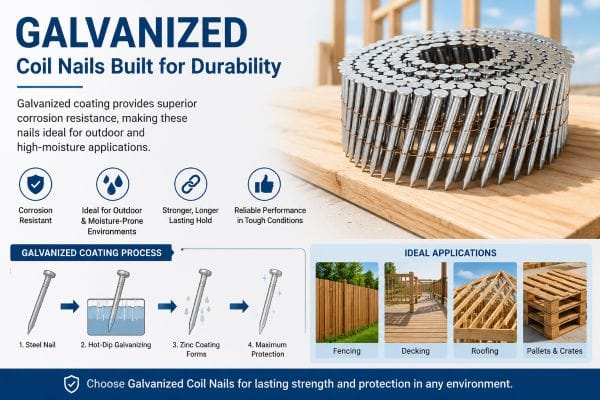
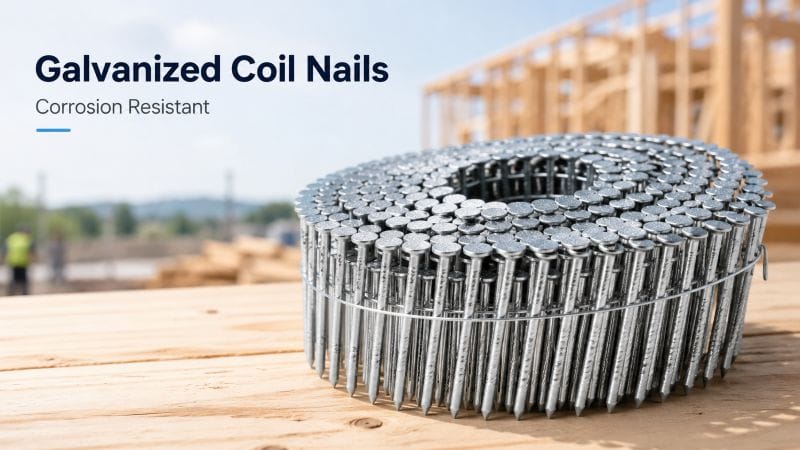
Galvanized coil nails are collated nails coated with a protective zinc layer to improve corrosion resistance. They are typically arranged in wire-collated or plastic-collated coils for use with pneumatic nail guns and automated fastening systems.
The zinc coating acts as a protective barrier between the steel nail and external moisture or oxygen, reducing the risk of rust formation.
Compared with standard bright nails, galvanized coil nails provide:
- Better corrosion resistance
- Longer service life
- Improved outdoor durability
- Reduced maintenance requirements
- Higher structural reliability
These characteristics make galvanized coil nails essential in many industrial and construction environments.
Why Corrosion Resistance Matters in Fastening
Impact of Rust on Structural Performance
When nails begin to corrode, several structural problems may occur:
- Reduced holding strength
- Weakening of wood joints
- Surface staining on wood materials
- Premature structural failure
- Increased maintenance costs
In industrial pallet systems and roofing applications, rusted fasteners can directly affect safety and transportation stability.
Environmental Exposure Risks
Fasteners used in the following environments are especially vulnerable to corrosion:
- Outdoor storage areas
- Coastal regions
- High-humidity warehouses
- Roofing systems
- Export packaging applications
Using galvanized coil nails helps minimize these risks and improve long-term performance.
Main Types of Galvanized Coil Nails
Electro-Galvanized Coil Nails
Electro-galvanized nails are coated using an electroplating process that applies a thin zinc layer onto the steel surface.
Advantages include:
- Smooth surface finish
- Lower production cost
- Moderate corrosion resistance
- Suitable for indoor and semi-outdoor applications
These nails are commonly used in:
- Interior construction
- Furniture manufacturing
- General woodworking
- Light industrial applications
Hot-Dip Galvanized Coil Nails
Hot-dip galvanized nails are submerged in molten zinc, creating a thicker and more durable protective coating.
Advantages include:
- Superior corrosion resistance
- Longer outdoor lifespan
- Better performance in humid environments
- Stronger protection against rust
Hot-dip galvanized coil nails are widely used in:
- Roofing systems
- Outdoor construction
- Industrial pallets
- Export wooden packaging
- Coastal applications

Electro-Galvanized vs Hot-Dip Galvanized Coil Nails
| Feature | Electro-Galvanized | Hot-Dip Galvanized |
|---|---|---|
| Coating Thickness | Thin | Thick |
| Corrosion Resistance | Moderate | Very high |
| Surface Finish | Smooth and bright | Rougher zinc texture |
| Outdoor Performance | Limited | Excellent |
| Cost | Lower | Higher |
| Typical Applications | Indoor projects | Outdoor industrial projects |
Understanding the differences between these coating methods helps buyers select the most suitable solution for their application environment.
Common Applications of Galvanized Coil Nails
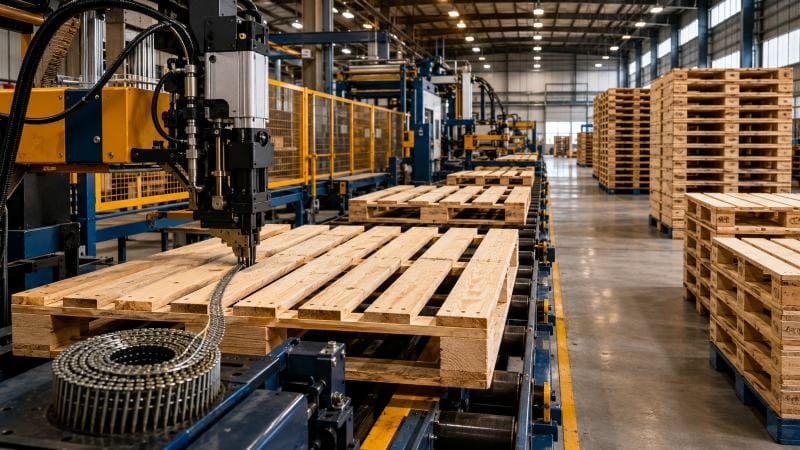
Industrial Pallet Manufacturing
Pallets used in logistics and export shipping are often exposed to moisture and changing temperatures.
Galvanized coil nails help:
- Prevent rust during storage and transportation
- Improve pallet lifespan
- Reduce structural failure risk
Ring shank galvanized coil nails are especially popular in export pallet production.
Roofing Applications
Roofing fasteners must withstand rain, humidity, and long-term weather exposure.
Hot-dip galvanized roofing coil nails provide:
- Improved wind resistance
- Long-term corrosion protection
- Better roof durability
Wooden Crates and Export Packaging
Export packaging frequently experiences:
- Ocean freight humidity
- Temperature fluctuations
- Long transportation cycles
Galvanized fasteners improve packaging stability and reduce corrosion-related damage.
Outdoor Wood Construction
Outdoor wooden structures such as decking, fencing, and framing systems require corrosion-resistant fastening solutions.
Hot-dip galvanized coil nails are widely preferred in these applications.
How Coating Thickness Affects Performance
Thin Zinc Coatings
Electro-galvanized nails typically have thinner coatings suitable for environments with lower moisture exposure.
Advantages include:
- Lower cost
- Cleaner surface appearance
- Easier installation
Thick Zinc Coatings
Hot-dip galvanized nails provide heavier zinc protection for harsh environments.
Benefits include:
- Better long-term corrosion resistance
- Longer structural lifespan
- Improved industrial durability
For industrial buyers, coating thickness should match environmental exposure conditions.
Choosing the Right Galvanized Coil Nails
Consider Environmental Conditions
The application environment should always determine coating selection.
| Environment Type | Recommended Nail Type |
|---|---|
| Dry indoor environments | Electro-galvanized |
| Moderate humidity | Electro-galvanized or hot-dip |
| Outdoor exposure | Hot-dip galvanized |
| Coastal or marine climates | Heavy hot-dip galvanized |
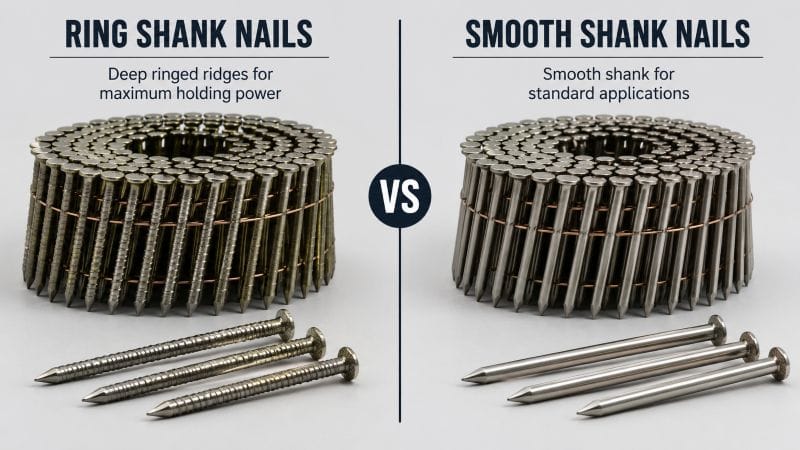
Select Proper Shank Type
Different shank designs provide different holding strength.
Smooth Shank
Suitable for light-duty applications.
Ring Shank
Preferred for pallets, roofing, and industrial packaging due to stronger withdrawal resistance.
Screw Shank
Used for heavy-duty fastening requiring maximum holding force.
Verify Nail Gun Compatibility
Ensure nails match:
- Coil angle
- Nail diameter
- Nail length
- Collation system
Proper compatibility improves production efficiency and reduces jamming risk.
Advantages of Using Galvanized Coil Nails
Longer Service Life
Corrosion-resistant coatings significantly extend fastener lifespan.
Lower Maintenance Costs
Reduced rust formation minimizes repair and replacement requirements.
Improved Structural Reliability
Stable fastening improves long-term performance in industrial environments.
Better Appearance
Galvanized fasteners reduce rust stains on visible wooden surfaces.
Common Procurement Mistakes
Choosing Based Only on Price
Low-cost fasteners may provide insufficient corrosion protection for demanding applications.
Using Indoor Nails Outdoors
Standard bright nails often fail quickly in humid or outdoor environments.
Ignoring Coating Quality
Poor galvanizing quality may result in uneven coating thickness and premature rusting.
Selecting Incorrect Specifications
Improper nail size or shank type may reduce fastening performance.
Quality Control in Galvanized Nail Manufacturing
Professional manufacturers maintain strict production standards through:
- Zinc coating thickness inspection
- Salt spray corrosion testing
- Mechanical strength testing
- Dimensional accuracy control
- Automated galvanizing systems
Consistent manufacturing quality is essential for industrial fastening reliability.
Future Trends in Corrosion-Resistant Fastening
Growth in Outdoor Construction
Demand for corrosion-resistant fasteners continues to increase in infrastructure and outdoor wood construction projects.
Higher Export Packaging Standards
International logistics systems increasingly require durable pallet fastening solutions.
Industrial Automation Expansion
Automated pallet and roofing production lines require consistent high-quality galvanized coil nails.
Conclusion
Galvanized coil nails play a critical role in industrial fastening applications where corrosion resistance and long-term durability are essential. Whether used in pallet manufacturing, roofing systems, export packaging, or outdoor construction, galvanized coatings help improve structural reliability and reduce maintenance costs.
By understanding coating types, environmental requirements, and fastening performance, industrial buyers can select the most suitable galvanized coil nails for their projects and ensure long-term operational efficiency.
FAQ
What are galvanized coil nails used for?
Galvanized coil nails are commonly used in pallets, roofing, export packaging, and outdoor wood construction.
Which is better: electro-galvanized or hot-dip galvanized?
Hot-dip galvanized nails provide stronger corrosion resistance for outdoor and humid environments.
Are galvanized coil nails suitable for pallets?
Yes. Galvanized ring shank coil nails are widely used in industrial pallet manufacturing and export packaging.
Do galvanized nails last longer than bright nails?
Yes. The zinc coating significantly improves corrosion resistance and extends service life.