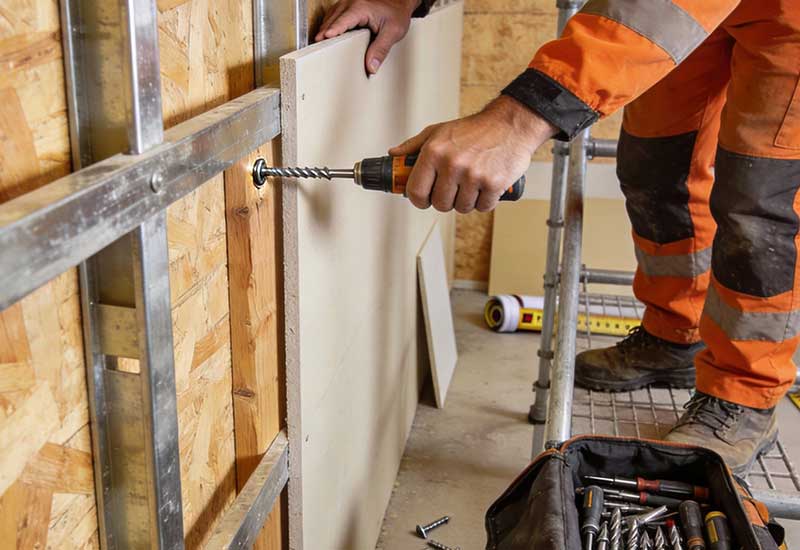
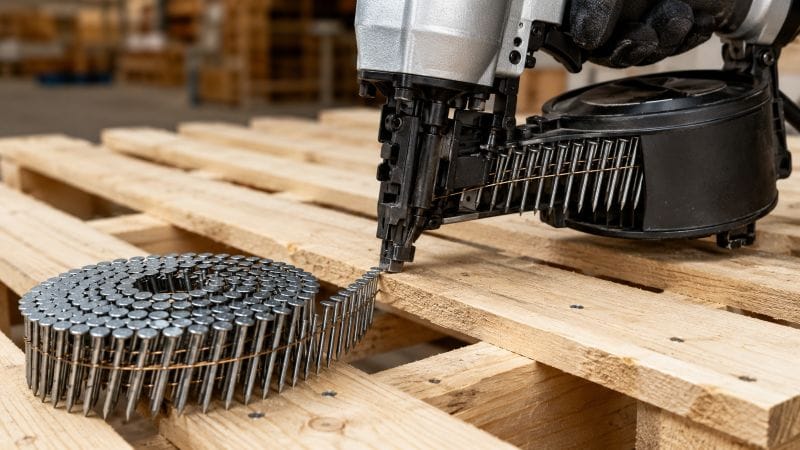
Industrial coil nails for construction are widely used in framing, sheathing, decking, fencing, roofing, and large-scale wood fastening projects. For contractors, importers, building material distributors, and pallet manufacturers, choosing the correct fastening products directly affects installation efficiency, structural durability, and long-term project reliability.
In modern construction environments, fastening systems are expected to deliver more than simple holding power. Industrial users require stable nail feeding, accurate penetration, corrosion resistance, and compatibility with pneumatic nail guns and automated production systems. This is why industrial coil nails have become an essential fastening solution across construction and industrial wood applications.
This guide explains the main types of industrial coil nails for construction, including nail sizes, coatings, shank designs, and practical selection recommendations for different construction environments.
Table of Contents
Why Industrial Coil Nails Are Used in Construction
Faster Installation Efficiency
Construction projects often involve repetitive fastening operations. Manual hammering slows down productivity and increases labor intensity, especially on large job sites.
Industrial coil nails are designed for pneumatic nail guns, allowing workers to install hundreds of fasteners continuously without frequent reloading. Compared with loose nails or strip nails, coil nails significantly improve installation speed.
For contractors and industrial manufacturers, this helps:
- Increase daily output
- Reduce labor costs
- Improve workflow efficiency
- Minimize downtime during fastening operations
Stable Fastening Performance
In construction applications, fastening consistency is critical. Poor-quality nails may bend during installation, feed inconsistently, or loosen over time.
Industrial coil nails are manufactured with controlled dimensions and stable collation systems to improve:
- Nail gun feeding performance
- Penetration consistency
- Structural holding strength
- Long-term fastening stability
This is particularly important in framing, roofing, pallet production, and structural wood assemblies.
Suitable for Multiple Industrial Applications
Industrial coil nails for construction are widely used in:
- Wood framing systems
- Roof decking and sheathing
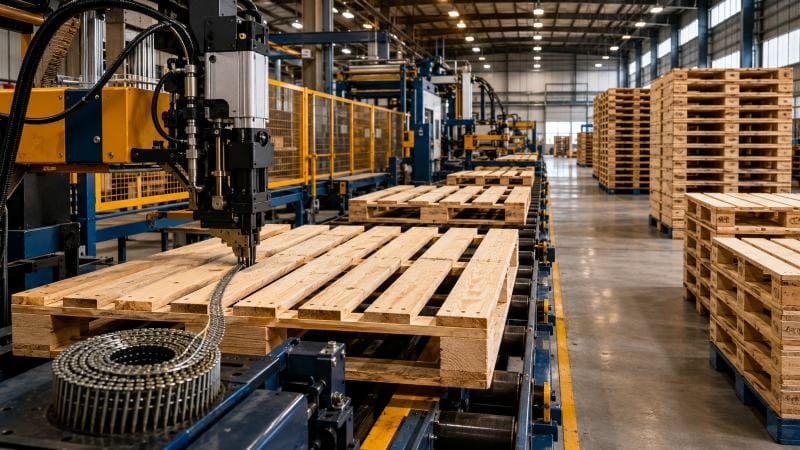
- Pallet manufacturing
- Export wooden packaging
- Decking and fencing
- Structural wood construction
- Temporary construction systems
- Industrial woodworking production
Different projects require different nail specifications, making proper selection essential.
Main Types of Industrial Coil Nails
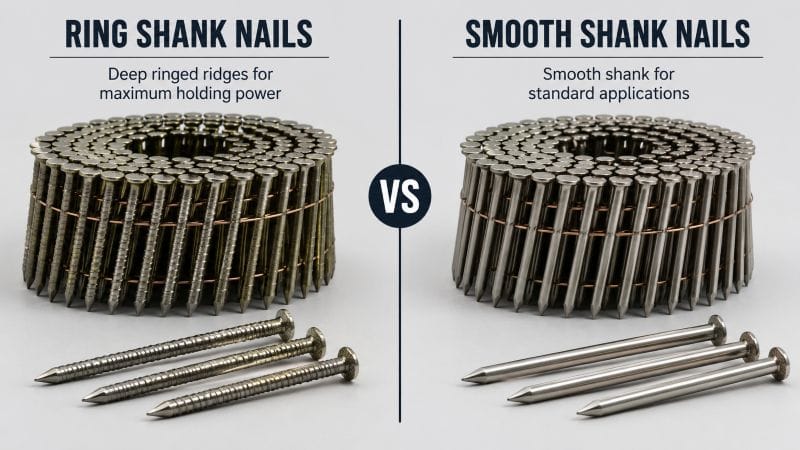
Smooth Shank Industrial Coil Nails
Smooth shank coil nails have a plain nail body without ridges or threads. They provide lower driving resistance and fast installation speed.
Advantages include:
- Faster penetration
- Lower installation resistance
- Cost-effective production
- Suitable for high-speed fastening
Smooth shank industrial coil nails are commonly used for:
- Temporary wood structures
- Interior construction
- Light-duty fastening
- General industrial wood applications
However, smooth shank nails provide lower withdrawal resistance compared with ring or screw shank designs.
Ring Shank Industrial Coil Nails
Ring shank industrial coil nails contain circular ridges along the nail body. These ridges compress wood fibers during installation, creating stronger mechanical locking inside the material.
Advantages include:
- Higher withdrawal resistance
- Better vibration resistance
- Improved structural stability
- Stronger long-term fastening
Ring shank coil nails are widely used in:
- Industrial pallet manufacturing
- Roofing systems
- Decking and fencing
- Export packaging
- Structural wood fastening
For heavy-duty industrial applications, ring shank coil nails are often preferred because of their stronger holding power.
Screw Shank Industrial Coil Nails
Screw shank coil nails feature a spiral shank design that improves gripping performance in dense wood materials.
Advantages include:
- Maximum holding strength
- Excellent pull-out resistance
- Strong fastening stability
- Improved performance in hardwood applications
Screw shank industrial coil nails are commonly used for:
- Heavy-duty wood structures
- Industrial construction projects
- Outdoor wood systems
- High-load fastening environments
Although screw shank nails may require more driving force, they provide superior long-term fastening reliability.
Industrial Coil Nail Size Guide
Selecting the correct nail size is important for fastening strength, penetration depth, and material compatibility.
| Application | Nail Length | Wire Diameter | Recommended Shank Type |
|---|---|---|---|
| Interior wood fastening | 25–45mm | 2.1–2.5mm | Smooth shank |
| Sheathing and roof panels | 45–65mm | 2.3–2.7mm | Smooth or ring shank |
| Framing construction | 65–90mm | 2.5–3.1mm | Ring or screw shank |
| Industrial pallets | 50–90mm | 2.5–3.1mm | Ring shank |
| Heavy-duty structures | 75–130mm | 2.9–3.3mm | Screw shank |
Using incorrect nail sizes may reduce structural stability or cause wood splitting.
Surface Coatings for Industrial Coil Nails
Bright Industrial Coil Nails
Bright coil nails do not contain protective coatings. They are mainly used in dry indoor environments where corrosion exposure is limited.
Applications include:
- Temporary structures
- Interior construction
- Indoor wood assemblies
Bright nails are more economical but are not recommended for outdoor environments.
Electro-Galvanized Coil Nails
Electro-galvanized industrial coil nails contain a thin zinc coating that improves corrosion resistance.
They are suitable for:
- Semi-indoor construction
- Moderate humidity environments
- General industrial fastening
Advantages include:
- Smoother surface finish
- Moderate corrosion protection
- Lower cost than hot-dip galvanized nails
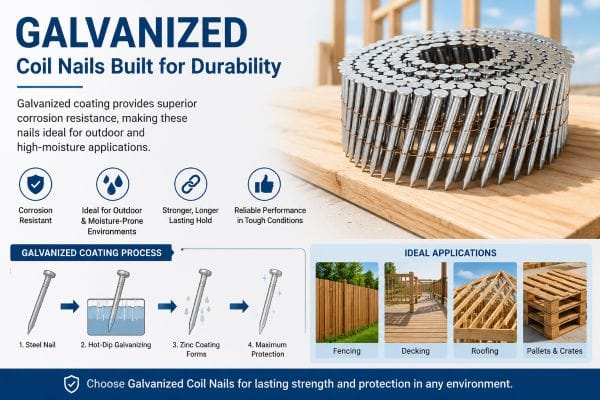
Hot-Dip Galvanized Coil Nails
Hot-dip galvanized coil nails contain a thicker zinc layer, providing significantly stronger corrosion resistance.
They are widely used in:
- Outdoor construction
- Roofing systems
- Decking structures
- Export packaging
- Coastal environments
For industrial buyers, hot-dip galvanized coil nails are often the preferred choice for long-term outdoor durability.
How to Choose Industrial Coil Nails for Construction
Match the Nail to the Application
Different construction projects require different fastening performance.
| Application Type | Recommended Coil Nail Type |
|---|---|
| Interior framing | Smooth shank bright nails |
| Roof decking | Ring shank galvanized nails |
| Outdoor fencing | Hot-dip galvanized ring shank nails |
| Industrial pallets | Ring shank industrial coil nails |
| Heavy-duty wood structures | Screw shank coil nails |
Choosing the correct specification improves project durability and fastening reliability.
Consider Environmental Conditions
Outdoor and humid environments increase corrosion risk.
For these conditions, galvanized industrial coil nails provide better long-term performance than bright nails.
Check Pneumatic Nail Gun Compatibility
Industrial coil nails should match:
- Nail gun angle
- Coil type
- Wire diameter
- Nail length
- Nail head specifications
Incorrect compatibility may cause:
- Nail jams
- Feeding problems
- Tool damage
- Reduced installation efficiency
Evaluate Holding Strength Requirements
Applications exposed to movement, vibration, or load stress typically require stronger shank designs.
Ring shank and screw shank industrial coil nails provide better long-term holding performance than smooth shank nails.
Common Problems Caused by Low-Quality Coil Nails
Nail Bending During Installation
Inconsistent steel wire quality or poor manufacturing control may cause bending during fastening.
Feeding and Jamming Issues
Low-quality collation systems may create unstable feeding inside pneumatic nail guns.
Weak Withdrawal Resistance
Poor shank design reduces holding power and increases structural instability.
Corrosion Problems
Insufficient zinc coating thickness may lead to premature rusting in outdoor applications.
Quality Standards in Industrial Coil Nail Manufacturing
Reliable industrial coil nail manufacturers maintain strict quality control processes.
Important quality control areas include:
- Steel wire tensile strength
- Nail dimensional consistency
- Coating thickness inspection
- Collation stability testing
- Salt spray corrosion testing
- Pneumatic feeding performance testing
Stable manufacturing quality is essential for industrial fastening systems.
Why Industrial Buyers Prefer Bulk Coil Nails
Bulk industrial coil nails help improve:
- Supply chain stability
- Inventory management
- Production planning
- Cost efficiency
For importers and distributors, bulk purchasing also allows:
- OEM packaging customization
- Stable long-term supply
- Better price consistency
- Faster order fulfillment
Industrial Coil Nails for Export Packaging and Logistics
Industrial export packaging systems require reliable fastening because pallets and wooden crates experience:
- Long transportation cycles
- Forklift handling
- Ocean freight humidity
- Repeated vibration
Ring shank galvanized industrial coil nails are widely used because they improve pallet durability and transportation safety.
Future Trends in Industrial Fastening
Growth in Automated Construction Systems
Modern factories increasingly use automated fastening systems that require stable high-quality coil nails.
Higher Demand for Corrosion Resistance
Outdoor construction and export packaging continue driving demand for galvanized industrial coil nails.
Expansion of Industrial Wood Packaging
Global logistics growth increases demand for durable pallets and industrial wood fastening systems.
Conclusion
Industrial coil nails for construction play a critical role in modern fastening systems. From framing and roofing to pallet manufacturing and export packaging, choosing the correct nail specification directly affects installation efficiency, structural durability, and long-term project performance.
Smooth shank coil nails are suitable for light-duty and temporary fastening, while ring shank and screw shank industrial coil nails provide stronger holding power for demanding industrial environments.
For contractors, importers, and distributors, working with a reliable industrial coil nail manufacturer helps ensure stable product quality, bulk supply capability, and long-term fastening reliability.
FAQ
What are industrial coil nails used for?
Industrial coil nails are used in construction, roofing, pallet manufacturing, export packaging, decking, and industrial wood fastening applications.
Which industrial coil nails are best for outdoor construction?
Hot-dip galvanized ring shank coil nails are commonly preferred for outdoor construction because they provide strong holding power and corrosion resistance.
Are ring shank coil nails better for industrial pallets?
Yes. Ring shank industrial coil nails provide stronger withdrawal resistance and improved pallet durability during transportation.
What size industrial coil nails are commonly used?
Common industrial coil nail lengths range from 45mm to 90mm, depending on the construction application and wood thickness.
Can industrial coil nails be customized?
Yes. Industrial coil nails can be customized by size, coating, shank type, collation style, and packaging according to project requirements.