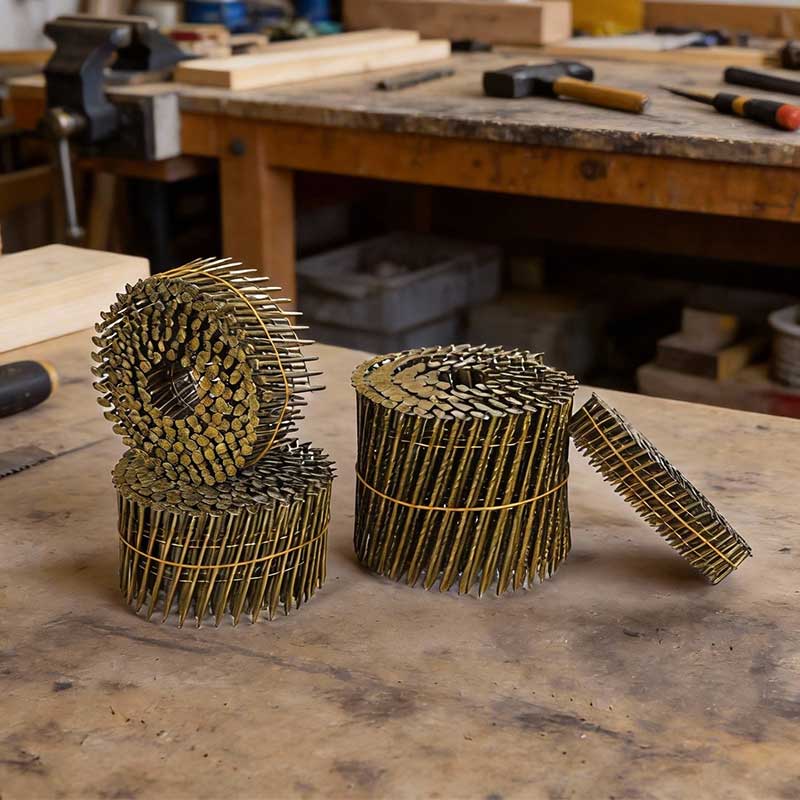
Woodworking projects, from furniture manufacturing to custom carpentry, require precise and durable fastening solutions. Using the right coil nails for woodworking ensures strong joints, reduces splitting, and improves project quality. This guide covers the types, sizes, coatings, and selection tips for coil nails used in woodworking, helping manufacturers, DIY enthusiasts, and distributors make informed decisions.
Table of Contents
Why Coil Nails Are Ideal for Woodworking
Fast and Efficient Installation
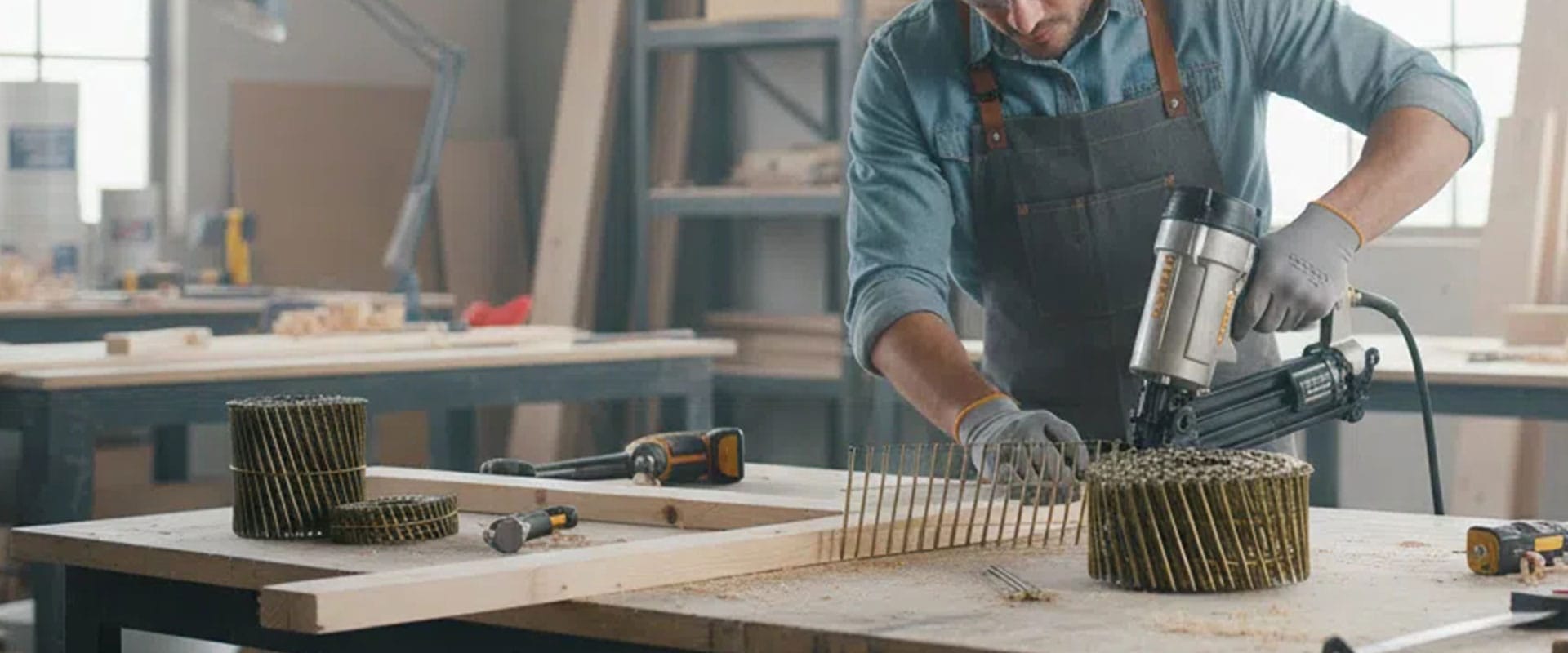
Coil nails are designed for use with pneumatic nail guns, allowing faster and more precise installation compared to manual nailing. This increases productivity and reduces labor costs.
Strong and Durable Joints
Properly selected coil nails ensure long-lasting wood joints, preventing loosening and enhancing the structural integrity of furniture or wood products.
Minimal Wood Damage
Using coil nails with correct size and shank type reduces wood splitting, which is particularly important for fine woodworking and delicate materials.
Types of Coil Nails for Woodworking

Smooth Shank Coil Nails
Smooth shank nails are ideal for light-duty woodworking projects and softwood materials. They are easy to drive and generally less expensive, making them suitable for temporary or indoor applications.
Ring Shank Coil Nails
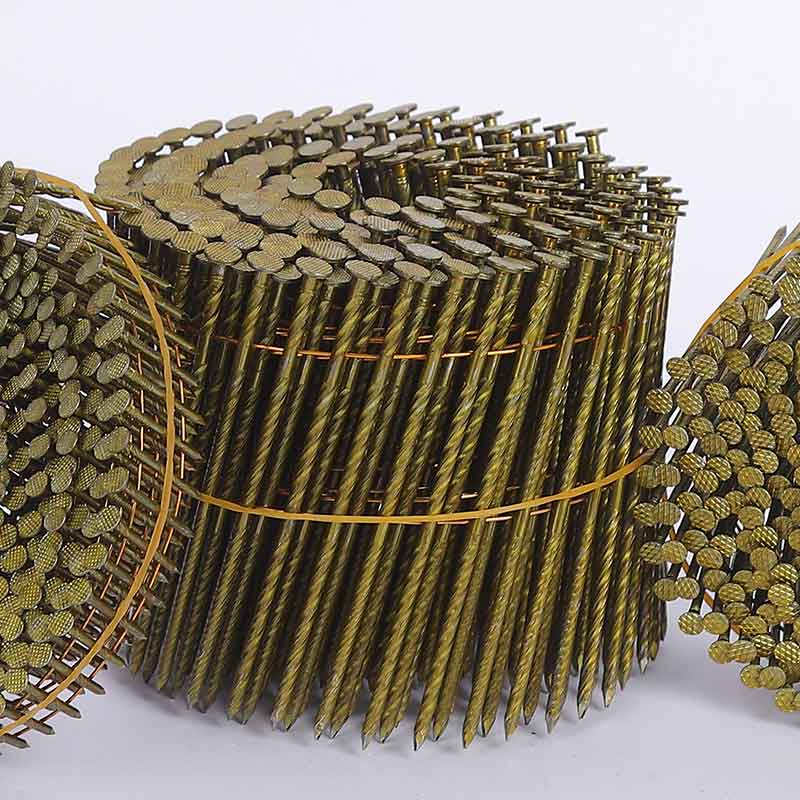
Ring shank nails provide superior holding power due to the ridges along the shank. They are recommended for high-stress joints and hardwood materials, preventing loosening over time.
Screw Shank Coil Nails
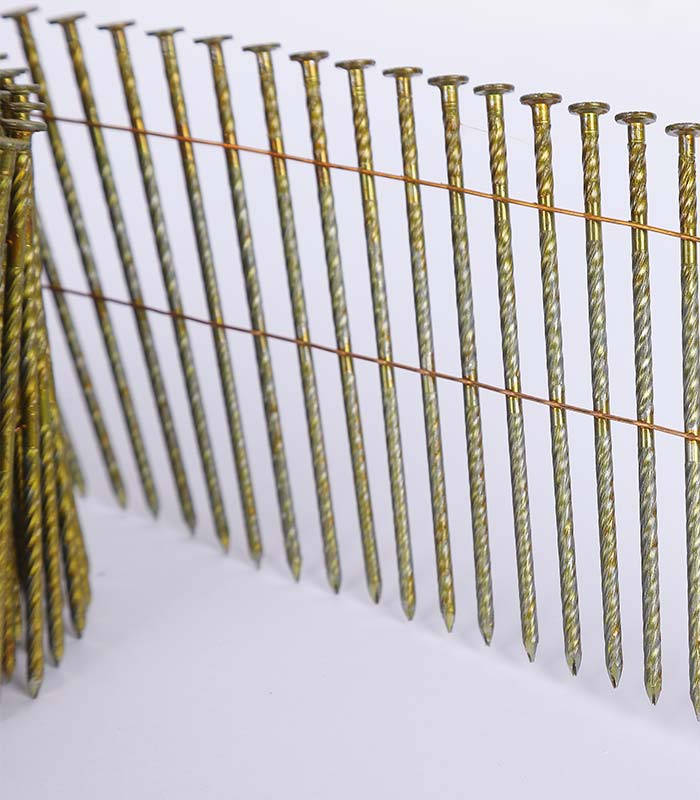
Screw shank nails offer maximum gripping strength. Their spiral design locks into the wood fibers, making them suitable for heavy-duty furniture, cabinetry, and structural wood components.
Common Sizes for Woodworking Coil Nails
Selecting the correct length and diameter is critical for wood strength and stability.
| Nail Type | Length Range | Diameter Range | Recommended Use |
|---|---|---|---|
| Smooth Shank | 25mm – 50mm | 2.0mm – 2.5mm | Light furniture, softwood |
| Ring Shank | 30mm – 65mm | 2.5mm – 3.0mm | Hardwood furniture, cabinets |
| Screw Shank | 35mm – 70mm | 2.8mm – 3.3mm | Heavy-duty furniture, carpentry |
Surface Coatings for Woodworking Coil Nails
Bright Finish
Bright nails are uncoated and best suited for indoor, dry applications. They are cost-effective but not corrosion-resistant.
Galvanized Nails
Electro-galvanized nails resist moderate humidity and are suitable for indoor and semi-outdoor woodworking projects.
Hot-Dip Galvanized Nails
Hot-dip galvanized nails provide strong corrosion protection, ideal for outdoor furniture or wood products exposed to moisture.
Stainless Steel Nails
Stainless steel nails offer maximum durability and corrosion resistance, suitable for outdoor or high-humidity environments.
How to Choose the Right Coil Nails for Woodworking
Match Nails to Wood Type
- Softwood: smooth or ring shank nails
- Hardwood: ring shank or screw shank nails for stronger holding
- Veneered wood: thinner nails to prevent splitting
Consider Project Type
Furniture and cabinetry may require finer nails for aesthetic reasons, while structural wood components need nails with higher holding power.
Nail Gun Compatibility
Ensure the selected coil nails match the pneumatic nail gun gauge and coil type to prevent misfires or damage.
Quantity and Packaging
Bulk orders reduce unit costs for manufacturers and help maintain a steady supply for ongoing projects.
Advantages of Using High-Quality Woodworking Coil Nails
- Strong, long-lasting wood joints
- Reduced splitting and wood damage
- Faster and more efficient assembly
- Consistent quality across projects
Common Mistakes When Selecting Woodworking Coil Nails
- Choosing nails without considering wood type and density
- Ignoring shank type, resulting in weak joints
- Overlooking corrosion protection for outdoor projects
- Focusing solely on price instead of performance
Supplier Selection Tips for Bulk Woodworking Coil Nails
- Verify production capacity and automation
- Check quality control and consistency
- Request product samples before placing large orders
- Evaluate export experience for international purchases
- Review client feedback and references
Cost Factors for Woodworking Coil Nails
| Factor | Impact on Price |
|---|---|
| Nail material | Stainless steel > hot-dip > galvanized > bright |
| Nail size | Longer and thicker nails cost more |
| Shank type | Screw shank > ring shank > smooth shank |
| Order quantity | Larger orders reduce unit cost |
| Packaging requirements | Custom or branded packaging increases cost |
Long-Term Benefits of Working with Reliable Manufacturers
Partnering with a trusted manufacturer ensures consistent quality, timely delivery, and technical support. Over time, this reduces project risk, improves efficiency, and supports business growth.
Conclusion
Selecting the right coil nails for woodworking is critical for achieving strong, durable, and aesthetically pleasing wood projects. Consider wood type, project requirements, nail size, shank type, and corrosion protection when making a decision. Working with reliable suppliers ensures consistent quality and a stable supply chain, benefiting both manufacturers and DIY enthusiasts.
FAQ
What type of coil nails are best for woodworking?
Ring shank nails are generally recommended for hardwood furniture, while smooth shank nails work well for softwood and light projects.
Can coil nails for woodworking be used outdoors?
Yes, but corrosion-resistant nails such as hot-dip galvanized or stainless steel are recommended for outdoor use.
How do I choose the right nail size?
Select nail length and diameter based on wood thickness, density, and nail gun compatibility.
Can woodworking coil nails be ordered in bulk?
Yes, bulk orders are available and often more cost-effective for manufacturers and distributors.