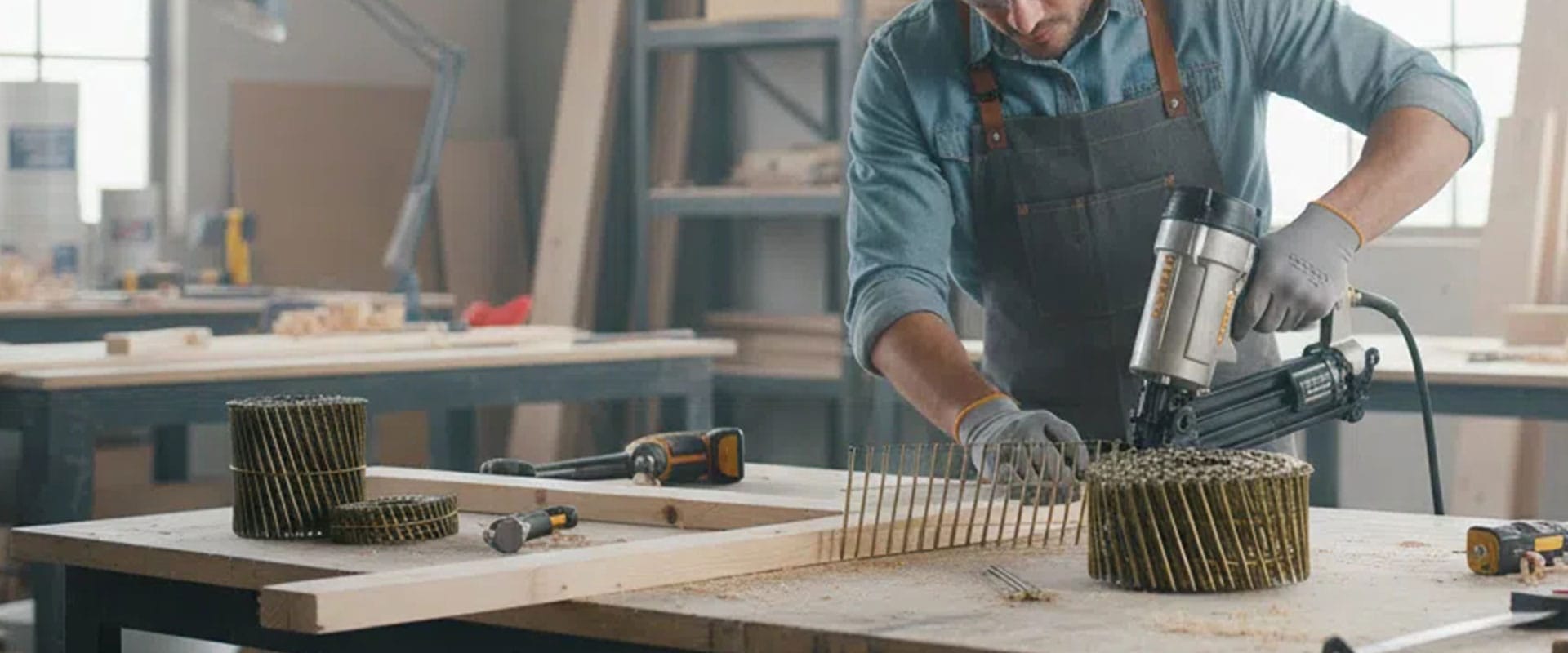
Pallet manufacturing requires strong and reliable fastening solutions to ensure durability during transportation and heavy loading. Choosing the best nails for pallet manufacturing is essential for maintaining structural integrity, reducing product damage, and improving overall production efficiency.
This guide explains the different types of nails used in pallet production, along with specifications, coatings, and practical selection tips.
Table of Contents
Understanding Pallet Manufacturing Requirements
Why Nail Selection Matters in Pallet Production
Wooden pallets are constantly exposed to heavy loads, vibrations during transport, and changing environmental conditions. The quality of nails plays a critical role in determining how well a pallet performs over time. Proper nail selection directly affects load-bearing capacity, structural stability, resistance to loosening, and overall service life.
When manufacturers use unsuitable or low-quality nails, pallets are more likely to fail under pressure. This can result in damaged goods, higher replacement costs, and reduced customer satisfaction. Selecting the best nails for pallet manufacturing helps ensure consistent performance and long-term reliability.
Key Challenges in Pallet Fastening
Pallet production involves several technical challenges that directly impact efficiency and product quality. One common issue is wood splitting during nailing, especially when using incorrect nail sizes or types. Another challenge is nail loosening caused by vibration during shipping, which can weaken the structure over time.
Corrosion is also a concern, particularly for pallets used in outdoor environments or international shipping. In addition, modern pallet factories require high-speed production, meaning nails must be compatible with automated equipment and capable of consistent performance. Addressing these challenges starts with choosing the right fastening solution.
Types of Nails Used in Pallet Manufacturing
Coil Nails for Pallets
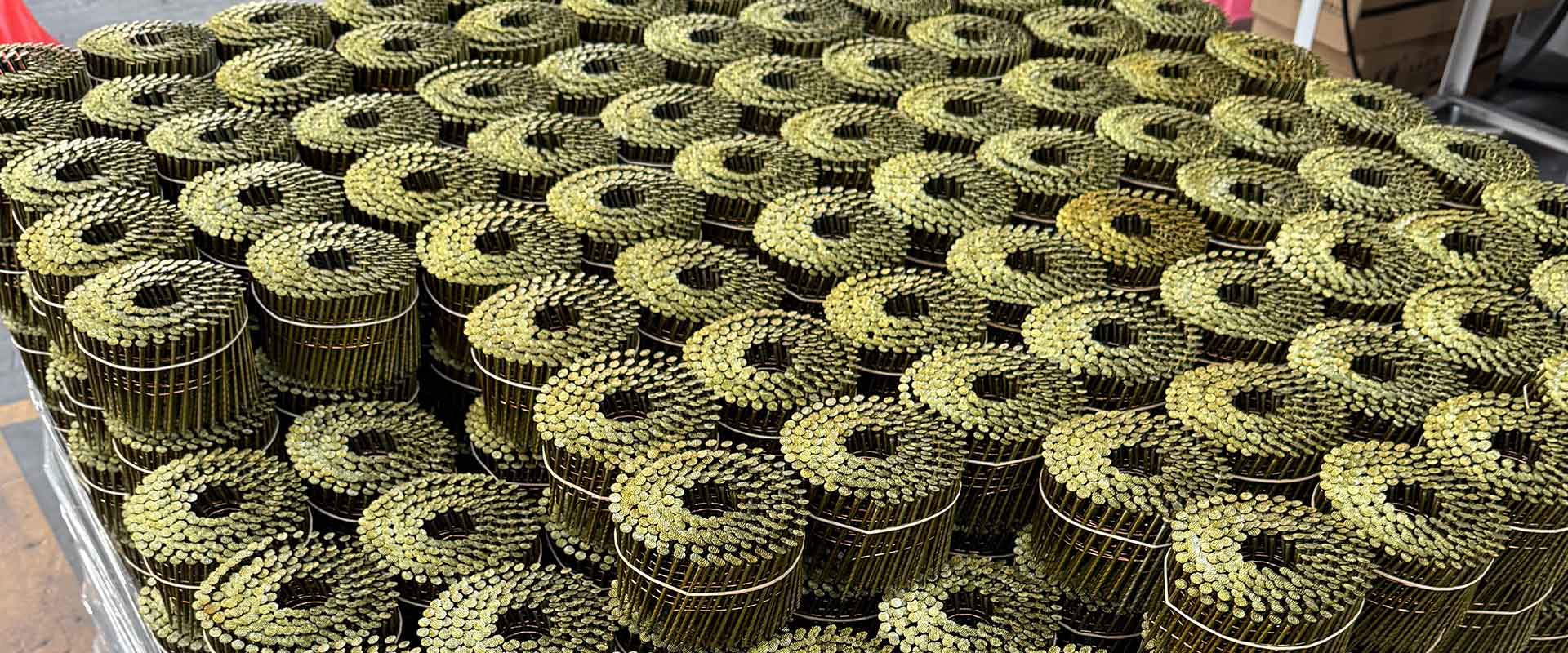
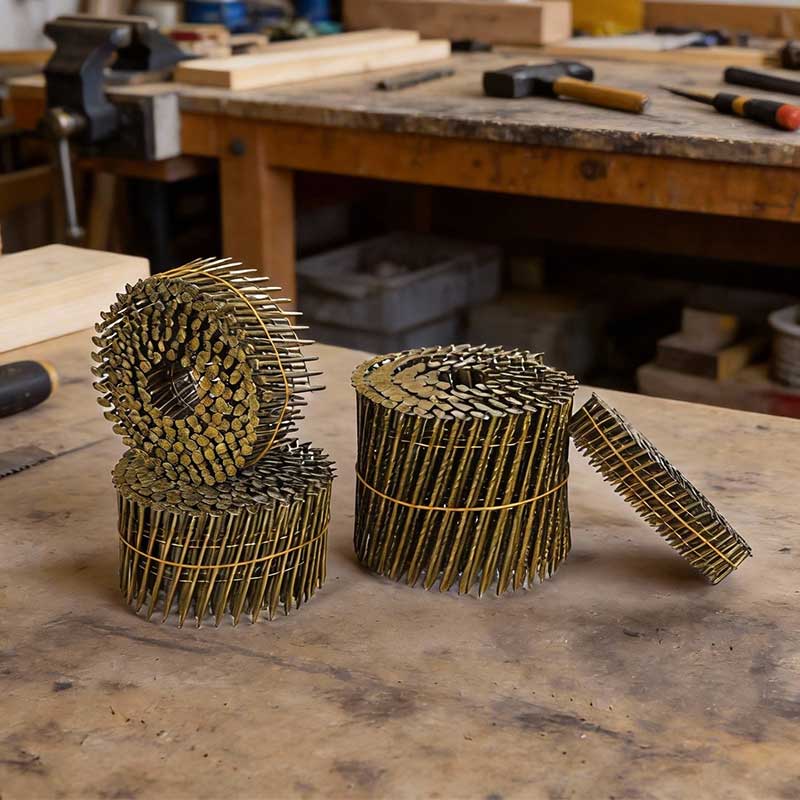
Coil nails are widely used in pallet production due to their efficiency and compatibility with pneumatic nail guns. These collated nails allow continuous operation without frequent reloading, making them ideal for large-scale manufacturing.
The main advantage of coil nails lies in their ability to improve productivity. They enable faster assembly, reduce labor intensity, and ensure consistent nail placement. For manufacturers operating automated or semi-automated production lines, coil nails are often the preferred choice.
Bulk Loose Nails
Loose nails are typically used in manual or semi-automatic pallet assembly processes. While they offer flexibility and lower upfront cost, they are less efficient than collated nails.
Because each nail must be handled individually, production speed is significantly slower. This makes loose nails less suitable for high-volume manufacturing environments where efficiency and consistency are critical.
Screw Nails for Heavy-Duty Applications
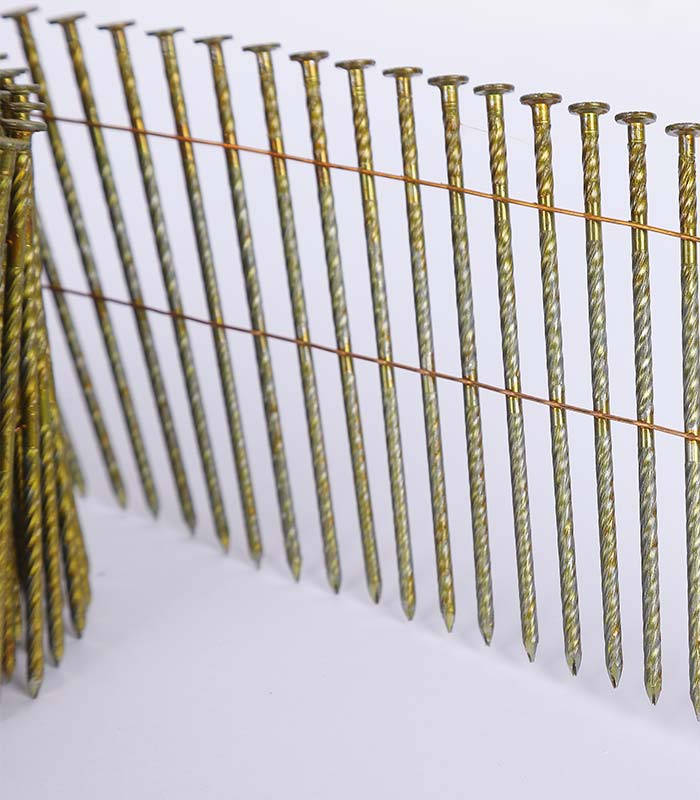
Screw shank nails are designed to provide enhanced holding strength. Their threaded design allows them to grip wood fibers more effectively, making them suitable for heavy-duty pallets.
These nails are often used in applications where pallets are exposed to high loads or repeated handling. Although they may be slightly more expensive, their performance benefits can justify the investment in demanding environments.
Nail Shank Types for Pallets
Ring Shank Nails
Ring shank nails are one of the most commonly used options in pallet manufacturing. The rings along the shank increase friction with the wood, resulting in excellent withdrawal resistance. This makes them ideal for pallets that experience vibration during transport.
Smooth Shank Nails
Smooth shank nails are easier to drive into wood and are generally more cost-effective. They are suitable for lighter-duty pallets but may loosen over time under dynamic loads.
Screw Shank Nails
Screw shank nails provide the highest level of holding strength. Their spiral design allows them to lock tightly into the wood, making them ideal for heavy-duty and export pallets.
Comparison of Nail Types for Pallet Manufacturing
The table below provides a clear comparison of common nail types used in pallet production, helping you choose the best nails for pallet manufacturing based on your specific needs.
| Nail Type | Holding Strength | Best Use Case | Advantages | Limitations |
|---|---|---|---|---|
| Smooth Shank | Medium | Light-duty pallets | Low cost, easy penetration | Lower resistance to pull-out |
| Ring Shank | High | Standard pallets, transport | Strong grip, resists loosening | Slightly higher cost |
| Screw Shank | Very High | Heavy-duty/export pallets | Maximum holding strength | Higher cost, slower driving |
| Coil Nails | High | Mass production pallets | High efficiency, fast installation | Requires nail gun |
This comparison highlights that ring shank and coil nails are typically the best nails for pallet manufacturing in most industrial scenarios.
Nail Sizes for Pallet Manufacturing
Selecting the correct nail size is essential for achieving optimal performance. Nail length and diameter must match the thickness and type of wood used in pallet construction.
Common Nail Lengths
Typical nail lengths for pallets range from 45mm to 90mm. Shorter nails may not provide sufficient penetration, while excessively long nails can damage the wood or reduce efficiency.
Nail Diameter
Nail diameter usually ranges from 2.5mm to 3.3mm. Thicker nails offer greater strength and resistance to bending, making them suitable for heavy loads.
Surface Coatings for Pallet Nails
Bright Finish
Bright nails have no coating and are typically used for indoor applications. They are cost-effective but offer limited corrosion resistance.
Galvanized Nails
Galvanized nails feature a zinc coating that improves resistance to rust. They are suitable for pallets used in moderately humid environments.
Hot-Dip Galvanized Nails
Hot-dip galvanized nails provide a thicker protective layer, making them ideal for outdoor use or high-humidity conditions. This significantly extends the lifespan of the pallet.

How to Choose the Best Nails for Pallet Manufacturing
Selecting the best nails for pallet manufacturing requires careful consideration of multiple factors.
Consider Load Requirements
Heavy-duty pallets require nails with higher holding strength, such as ring shank or screw shank designs.
Production Efficiency
For high-volume production, coil nails provide clear advantages due to their speed and compatibility with nail guns.
Environmental Conditions
Outdoor or export pallets require corrosion-resistant coatings to ensure durability.
Wood Type
Hardwood requires stronger and thicker nails, while softwood allows easier penetration.
Equipment Compatibility
Ensure that the selected nails match your equipment to avoid operational issues.
Advantages of Using the Right Pallet Nails
Using the correct nails improves pallet durability, reduces maintenance costs, increases production efficiency, and ensures better load stability during transport.
Common Mistakes in Pallet Nail Selection
Common mistakes include using incorrect nail sizes, ignoring corrosion resistance, choosing low-quality materials, and failing to match nails with equipment.
How to Ensure Nail Quality for Pallet Production
To ensure consistent quality, manufacturers should work with reliable suppliers, request samples, verify mechanical strength, and confirm coating performance.
Conclusion
Choosing the best nails for pallet manufacturing is a key factor in ensuring durability, efficiency, and cost-effectiveness. From coil nails used in high-speed production to screw shank nails designed for heavy loads, each option serves a specific purpose. Selecting the right type, size, and coating helps manufacturers improve product quality and optimize production processes.
FAQ
What are the best nails for pallet manufacturing?
Ring shank and coil nails are widely considered the best due to their strong holding power and efficiency.
Are coil nails suitable for pallet production?
Yes, coil nails are commonly used because they improve speed and consistency in manufacturing.
What size nails are used for pallets?
Most pallet nails range from 45mm to 90mm depending on pallet design.