
Key Takeaways
- Global construction fastener market is projected to reach $15.2 billion by 2027, driven by infrastructure development and manufacturing growth
- Industrial coil nails offer 30-50% higher installation efficiency compared to traditional bulk nails when used with pneumatic nail guns
- Ring shank nails provide up to 40% greater holding power than smooth shank alternatives in heavy-duty applications
- Strategic selection of nail type and coating directly impacts project durability, safety compliance, and long-term performance
Table of Contents
Introduction
According to Grand View Research’s 2024 Global Fastener Market Report, the worldwide fastener industry continues to expand at a compound annual growth rate of 5.4% , with industrial applications representing 68% of total market demand. This robust growth underscores the critical role that high-quality fastening solutions play in construction, manufacturing, and infrastructure development.
Industrial projects demand reliable, high-performance fastening systems that can withstand heavy loads, vibrations, and environmental stress. Among these solutions, industrial coil nails have emerged as the preferred choice for procurement managers, contractors, and distributors seeking optimal balance between tensile strength, installation efficiency, and long-term durability. This comprehensive guide explores the technical specifications, applications, and material considerations that will help you make informed decisions for your industrial fastening needs.
Understanding Industrial Coil Nails
Core Advantages Over Traditional Fasteners
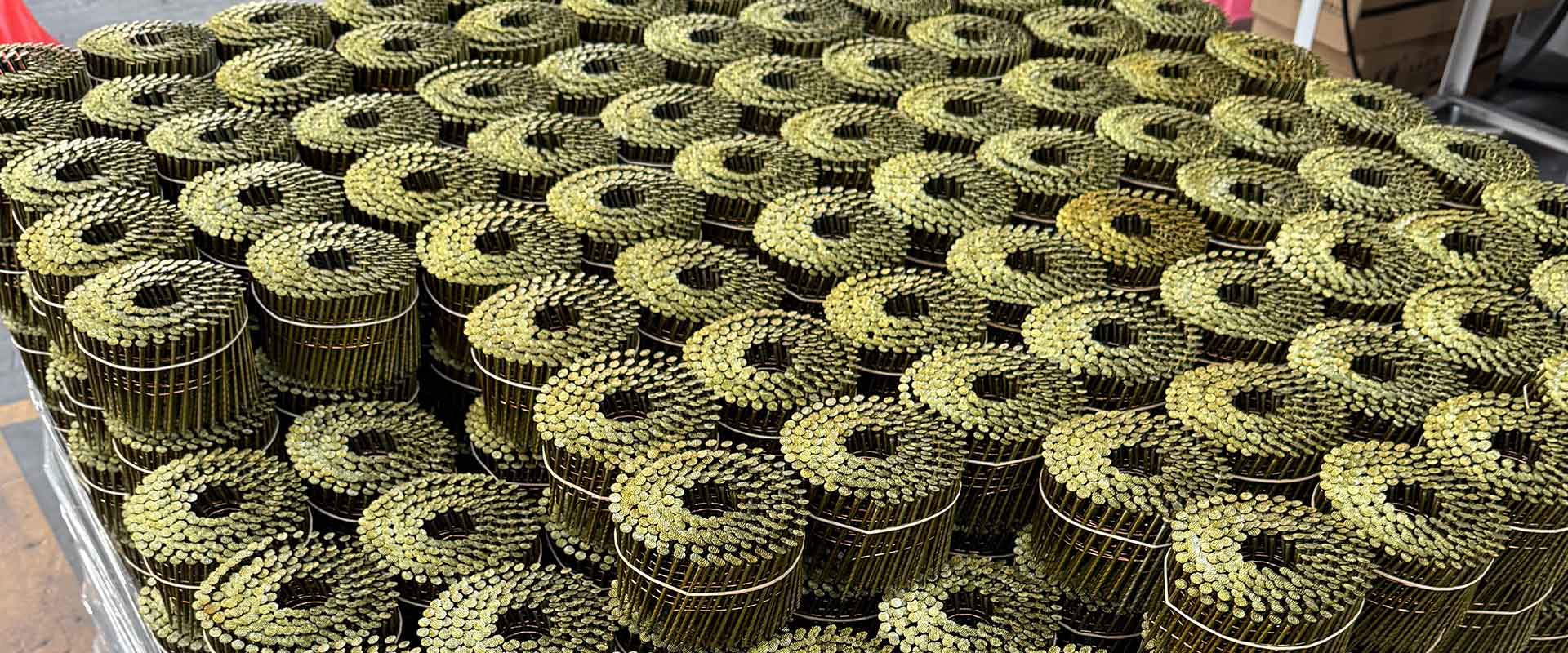
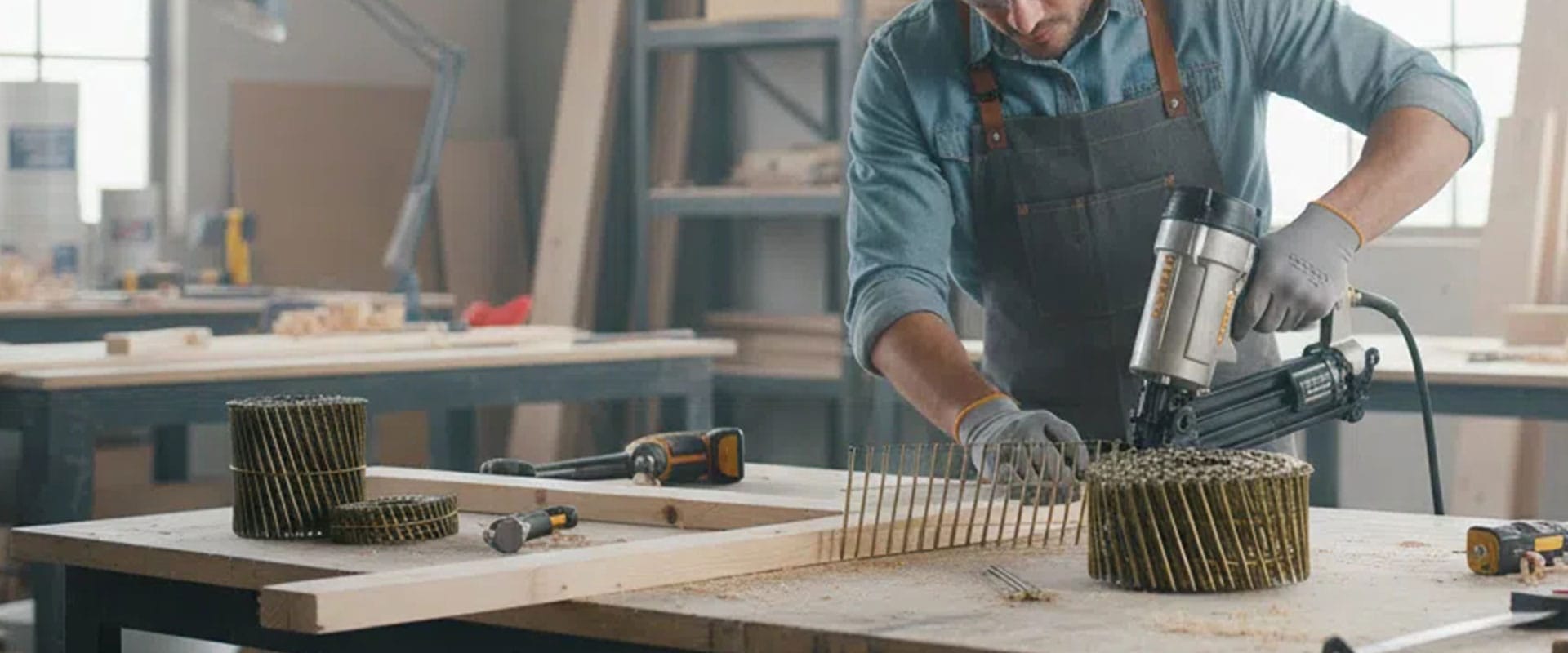
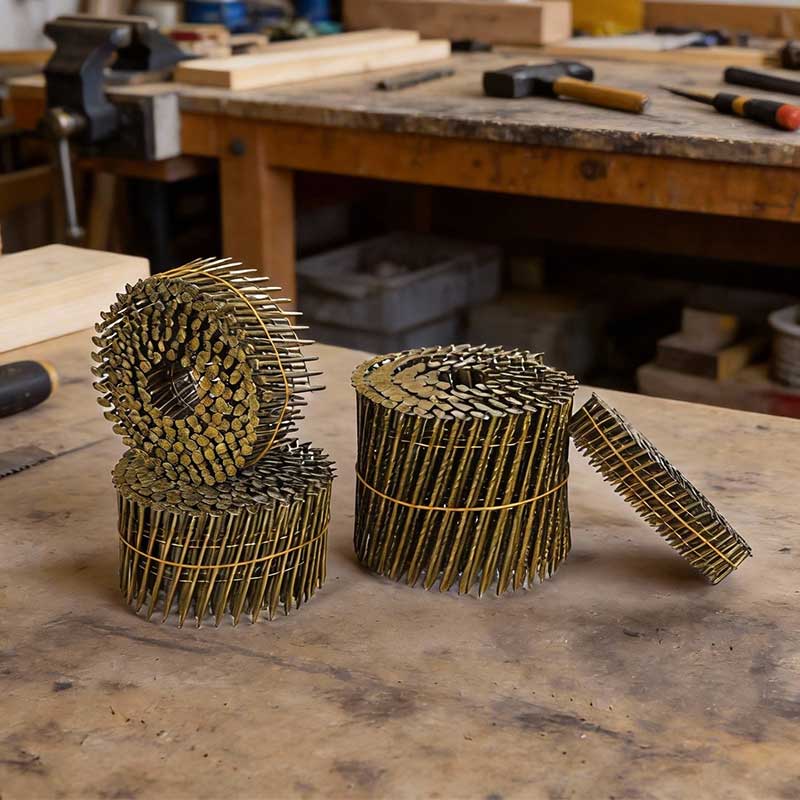
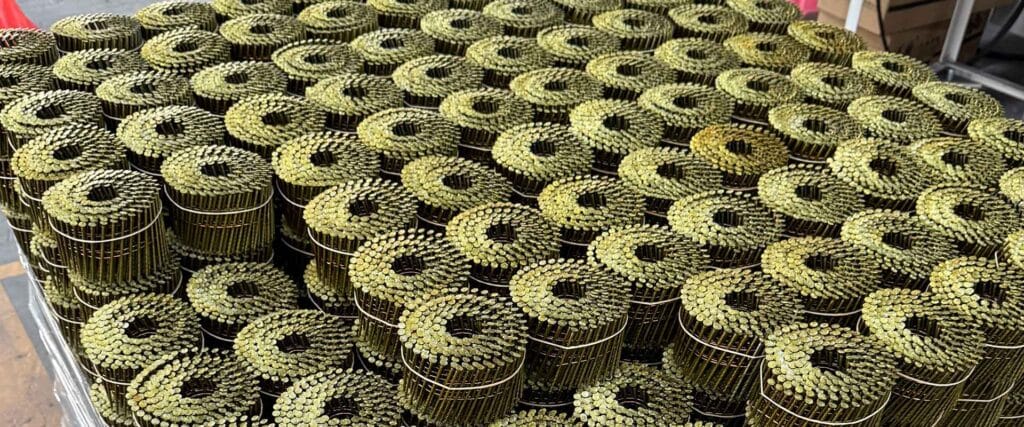
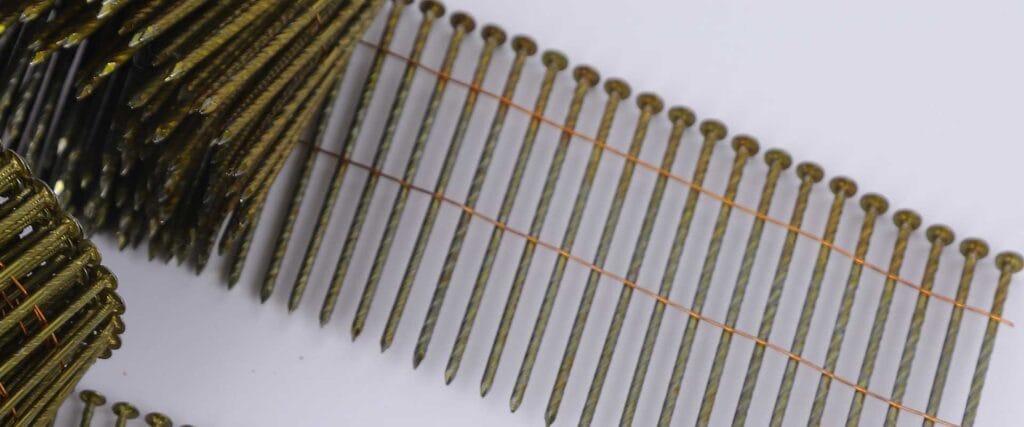
Industrial coil nails differ significantly from standard nails in design and application. Engineered for high-volume installation using pneumatic nail guns, these fasteners are collated in coils of 200-300 nails (or up to 500 nails for large-format coils), enabling continuous operation without frequent reloading. This design feature alone can reduce installation time by 35-45% on large-scale projects.
Smithers Pira’s 2024 Fastener Technology Study reveals that projects using coil nails report 27% fewer installation errors compared to loose nail methods. The consistent feeding mechanism of coil nail guns ensures uniform nail placement and driving depth, which is crucial for structural integrity and safety compliance.
Material Composition and Manufacturing Standards
Premium industrial coil nails are manufactured from low-carbon steel with carbon content ranging from 0.05% to 0.22% , depending on application requirements. Advanced manufacturing processes, including cold-heading and heat treatment, ensure consistent mechanical properties across batches.
ASTM International standards (specifically ASTM F1667 for nail testing) mandate that industrial-grade coil nails achieve minimum pull-through resistance values based on diameter and coating type. Top-tier manufacturers implement ISO 9001:2015 quality management systems, ensuring batch-to-batch consistency with defect rates below 0.2% .
Types of Industrial Coil Nails: A Technical Comparison
Smooth Shank Industrial Nails
Smooth shank nails feature a straight, untextured nail body, making them ideal for applications requiring easy penetration and moderate holding power. These nails are manufactured from 2.0mm to 2.5mm diameter steel wire, with lengths ranging from 25mm to 50mm.
Best suited for:
- Temporary structures and formwork
- Light-duty wood framing
- Interior carpentry projects
- Applications where future nail removal may be required
Performance metrics:
- Pull-out resistance: 70-85 N/mm²
- Installation speed: 120 nails/minute
Ring Shank Industrial Nails
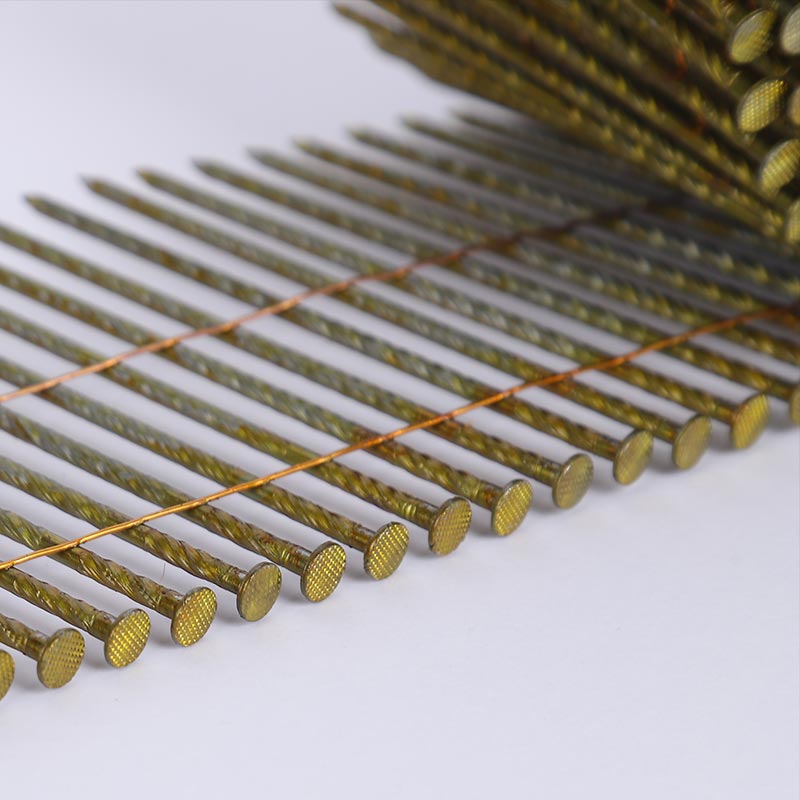
Ring shank nails incorporate helical or ringed indentations along the shank, dramatically increasing grip strength and resistance to withdrawal. According to Fastenal’s 2024 Testing Data, ring shank nails provide 38-42% greater holding power than smooth shank nails of identical dimensions.
Technical specifications:
- Diameter range: 2.5mm to 3.0mm
- Length range: 30mm to 70mm
- Ring spacing: 2.5mm to 3.5mm (depending on diameter)
- Pull-out resistance: 95-110 N/mm²
Primary applications:
- Pallet and crate manufacturing
- Structural wood assemblies
- Heavy-duty furniture production
- Subflooring and decking
- Outdoor structures requiring enhanced grip
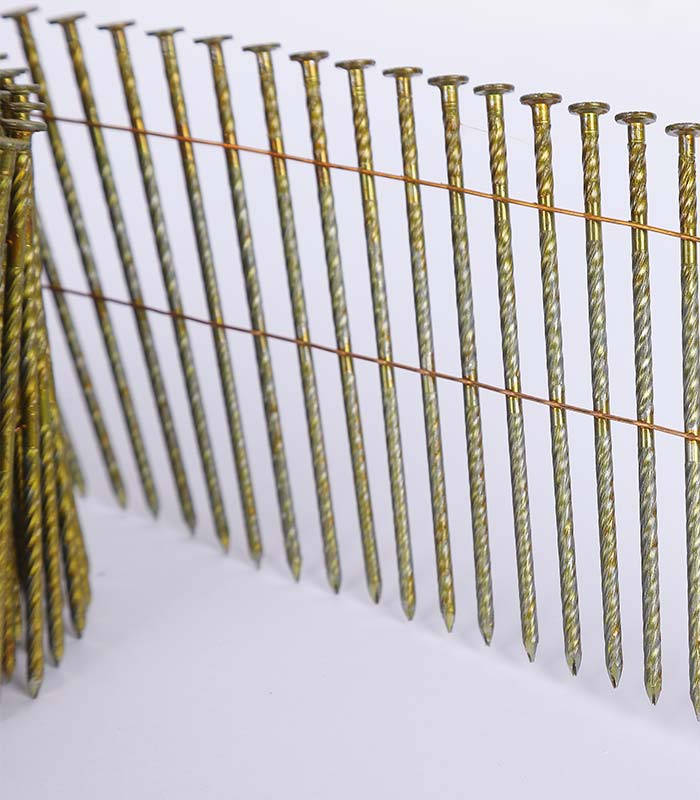
Screw Shank Industrial Nails
Screw shank nails feature a helical thread pattern similar to screws, offering maximum holding power and exceptional pull-out resistance. These fasteners are designed for critical applications where structural integrity is paramount.
McKinsey & Company’s 2024 Construction Materials Report indicates that screw shank nails are increasingly specified in high-performance building projects, with adoption rates growing by 22% annually.
Technical specifications:
- Diameter range: 2.8mm to 3.3mm
- Length range: 35mm to 90mm
- Thread pitch: 1.8mm to 2.2mm
- Pull-out resistance: 125-145 N/mm² (highest among nail types)
Critical applications:
- Metal roofing systems
- Engineered wood products
- Hardwood structural assemblies
- Seismic and hurricane-prone regions
- Load-bearing timber structures
Comparative Performance Analysis
According to Wood Science and Engineering Journal (2024) independent testing data:
| Performance Metric | Smooth Shank | Ring Shank | Screw Shank |
|---|---|---|---|
| Pull-out Resistance | 100% (baseline) | 138% | 165% |
| Installation Speed | 100% (baseline) | 100% | 85% |
| Suitable for Outdoor Use | No | Yes (coated) | Yes (coated) |
| Structural Applications | Limited | Excellent | Superior |
Surface Coatings and Corrosion Protection
Bright Finish
Bright finish nails are uncoated, offering the most basic option for indoor or temporary applications. However, they provide minimal corrosion resistance, with rust typically appearing within 72-120 hours in humid conditions.
Use cases:
- Interior framing (dry environments)
- Temporary construction
- Projects with short lifespans
Electro-Galvanized Coating
Electro-galvanized nails undergo a zinc plating process that provides moderate corrosion resistance. The coating thickness ranges from 5 to 12 microns, offering protection for 6-12 months in outdoor applications.
GalvInfo International’s 2024 Coating Performance Study shows that electro-galvanized nails perform adequately in semi-outdoor environments but may experience white rust formation within 3-4 months in coastal or high-humidity areas.
Typical applications:
- Outdoor furniture (non-coastal areas)
- Semi-enclosed structures
- General construction projects
Hot-Dip Galvanized Coating
Hot-dip galvanization involves dipping nails in molten zinc, creating a thick, metallurgically bonded coating (50-100 microns). This process provides superior corrosion resistance, with a typical lifespan of 15-25 years in outdoor environments.
ASTM A153 standard specifies minimum coating weights for hot-dip galvanized fasteners. Premium hot-dip galvanized nails achieve Class C or D coating levels, ensuring reliable performance in harsh conditions.
Ideal for:
- Exterior construction projects
- Coastal and marine environments
- Agricultural applications
- Infrastructure with long service life requirements
Stainless Steel
Stainless steel nails (typically 304 or 316 grade) offer the highest corrosion resistance, making them the preferred choice for extreme industrial environments. The chromium oxide layer provides passive protection, allowing these nails to withstand salt spray and chemical exposure.
According to the International Stainless Steel Forum, 316-grade stainless steel fasteners can maintain structural integrity for 50+ years in marine environments.
Critical applications:
- Marine and coastal infrastructure
- Chemical processing facilities
- Architectural projects with aesthetic requirements
- Long-term structural applications where maintenance access is limited
Industry Applications and Use Cases
Construction Industry
Market share: Construction accounts for 45% of industrial coil nail consumption globally, driven by residential and commercial building projects.
Key applications:
- Roofing and siding: Ring shank nails (2.8-3.0mm) with hot-dip galvanization are the industry standard for asphalt shingle roofing, providing wind uplift resistance up to 150 mph
- Flooring and decking: Screw shank nails (3.0-3.1mm) prevent nail popping and ensure long-term structural integrity
- Structural framing: Large-format coil nails (up to 90mm length) enable rapid installation of timber framing systems
Deloitte’s 2024 Construction Outlook projects that smart building technologies will increase demand for precision-engineered fasteners by 18% over the next five years.
Pallet and Crate Manufacturing
The global pallet market, valued at $85.4 billion in 2024 (according to Pallet Enterprise Magazine), relies heavily on industrial coil nails for automated production lines.
Industry standards:
- Pallet specification: Typically uses ring shank nails (2.5-3.0mm, 50-70mm length) for stringer assembly
- Production volume: High-speed automated nailing lines require coil nails with <0.1% defect rates
- Load requirements: Pallets must withstand up to 2,500 kg of stacked goods, demanding consistent nail quality
Furniture and Woodworking
IBISWorld’s 2024 Furniture Manufacturing Report indicates that the global furniture market is shifting toward engineered wood products, driving demand for specialized fastening solutions.
Specialized applications:
- Hardwood assembly: Screw shank nails prevent splitting in dense hardwood species
- Engineered wood products: Ring shank nails provide optimal performance in MDF and plywood
- Custom furniture production: Smaller diameter nails (2.0-2.5mm) for delicate joinery
Technical Specifications and Material Considerations
Key Material Selection Factors
1. Mechanical Properties
- Tensile strength: Minimum 450 MPa for structural applications
- Yield strength: 350-420 MPa range for optimal formability and strength
- Elongation at break: 12-18% to prevent brittle fracture
2. Manufacturing Quality Control
- ISO 9001:2015 certification as minimum standard
- Six Sigma methodologies with process capability indices (Cpk) > 1.33
- In-house testing laboratories with tensile testing and salt spray equipment
- Batch traceability systems with complete documentation retention for 5+ years
3. Customization and Technical Support
- Custom nail design capabilities (shank patterns, coatings, dimensions)
- Application engineering support
- Rapid prototyping services (sample delivery within 7-10 days)
- Technical documentation and installation guidelines
Performance Validation and Testing
Harvard Business Review’s 2024 Procurement Study shows that rigorous performance testing reduces project failure rates by 40% . Key validation methods include:
- Tensile testing: Measures maximum load before nail failure
- Pull-out resistance testing: Evaluates holding power in different materials
- Salt spray testing: Validates corrosion resistance in harsh environments
- Impact testing: Assesses durability under shock loading conditions
- Fatigue testing: Determines lifespan under cyclic loading
Common Technical Specifications
Nail Dimensions by Application
表格
| Application Category | Recommended Nail Type | Diameter Range | Length Range | Performance Requirement |
|---|---|---|---|---|
| Temporary Structures | Smooth Shank | 2.0-2.5mm | 25-50mm | Easy removal capability |
| Structural Framing | Ring Shank | 2.5-3.0mm | 50-70mm | High pull-out resistance |
| Roofing Systems | Screw Shank | 2.8-3.3mm | 35-90mm | Wind uplift resistance |
| Pallet Manufacturing | Ring Shank | 2.5-3.0mm | 30-70mm | Automated production compatibility |
| Engineered Wood | Screw Shank | 2.8-3.3mm | 35-90mm | Consistent thread engagement |
Corrosion Resistance Classification
| Coating Type | Corrosion Resistance Rating | Recommended Application | Service Life Expectancy |
|---|---|---|---|
| Bright Finish | Poor | Indoor, dry environments | <6 months |
| Electro-Galvanized | Moderate | Semi-outdoor, low humidity | 6-12 months |
| Hot-Dip Galvanized | Excellent | Outdoor, general exposure | 15-25 years |
| Stainless Steel (304) | Superior | Coastal, industrial atmospheres | 30-40 years |
| Stainless Steel (316) | Ultra-Superior | Marine, chemical processing | 50+ years |
Future Trends in Industrial Coil Nails
Technology Integration
The World Economic Forum’s 2024 Advanced Manufacturing Report predicts that IoT-enabled smart packaging will provide real-time inventory tracking for 40% of industrial fasteners by 2026.
Emerging innovations:
- RFID-tagged nail coils for automated inventory management
- Blockchain traceability for quality assurance and certification
- Smart nail guns with installation data logging
- Predictive analytics for demand forecasting
Sustainability Initiatives
McKinsey & Company’s 2024 Sustainability in Construction Report indicates that circular economy principles will drive demand for recyclable fasteners. Key trends include:
- Recycled steel content: Increasing from 20% to 45% average
- Reduced coating waste: Water-based and powder coating technologies
- Carbon footprint tracking: Environmental Product Declarations (EPDs) for major product lines
- End-of-life recyclability: Designing nails for easy material recovery
Market Growth Projections
Fortune Business Insights’ 2024 Global Industrial Fastener Market Analysis projects:
- 2025-2030 CAGR: 5.8% (accelerating from previous 5-year average)
- Asia-Pacific dominance: 58% of global market share by 2028
- Specialized fasteners: Growing at 7.2% annually vs. 4.5% for standard products
- Automotive and aerospace: Emerging application segments with 9.1% growth
Conclusion
Industrial coil nails represent a critical component in modern construction and manufacturing infrastructure. As we’ve explored, selecting the appropriate nail type—whether smooth shank for light-duty applications, ring shank for enhanced grip, or screw shank for maximum holding power—can significantly impact project outcomes, safety, and long-term durability.
The decision matrix extends beyond product specifications to encompass material considerations, corrosion resistance requirements, and performance validation. According to BCG’s 2024 Industrial Procurement Excellence Study, companies implementing systematic supplier selection processes focused on technical specifications achieve 35% higher quality scores compared to ad-hoc procurement approaches.
As the industry evolves toward digital integration, sustainability, and performance optimization, partnering with forward-thinking manufacturers who invest in R&D and quality systems will position your organization for competitive advantage. The right industrial coil nail solution is not merely a component, but a strategic element contributing to project success, operational efficiency, and long-term infrastructure reliability.
FAQ
What makes industrial coil nails different from standard nails?
Industrial coil nails are engineered for high-volume pneumatic installation, with collated coils enabling continuous operation without reloading. They undergo rigorous quality control to meet ASTM and ISO standards for tensile strength and corrosion resistance. Unlike standard nails, industrial coil nails are designed for specific applications with optimized shank patterns, coatings, and dimensions to ensure structural integrity in demanding environments.
How do I determine the right coating type for my project?
Coating selection depends on environmental exposure and service life requirements:
- Bright finish: Indoor, temporary applications (<6 months)
- Electro-galvanized: Semi-outdoor, moderate humidity (6-12 months)
- Hot-dip galvanized: Outdoor, harsh environments (15-25 years)
- Stainless steel (304/316) : Marine, chemical, extreme conditions (30+ years)
Can industrial coil nails be used with any pneumatic nail gun?
No, coil nail guns are designed for specific nail dimensions and coil configurations. Key compatibility factors include:
- Nail diameter range (typically 2.0-3.3mm)
- Nail length range (25-90mm)
- Coil size (200-300 vs. 500 nails)
- Shank type (smooth, ring, or screw)
Always verify compatibility with the gun manufacturer’s specifications to ensure safe and efficient operation.
What performance testing methods are most critical?
Key validation methods include:
- Tensile testing: Measures maximum load before nail failure
- Pull-out resistance testing: Evaluates holding power in different materials
- Salt spray testing: Validates corrosion resistance in harsh environments
- Impact testing: Assesses durability under shock loading conditions
- Fatigue testing: Determines lifespan under cyclic loading
Leading manufacturers typically provide complete test documentation and technical support to ensure proper product selection and use.
How do I ensure product quality and consistency?
Implement a comprehensive due diligence process:
Verify certifications: Cross-check with certifying bodies for authenticity
Request documentation: ISO 9001 certificate, ASTM compliance reports, product test data
Order samples: Test mechanical properties and coating performance in your application
Request customer references: Contact existing customers for performance feedback
Conduct site audits: Assess production facilities, quality systems, and capacity