Table of Contents
A coil nail withdrawal test result is only comparable with another result when the method, specimens, and reported quantity match. The largest number on a supplier report is not automatically the best fastening option. Start by asking what was pulled, from which material, under what conditions, and how the number was calculated.
This guide is for purchasing and quality teams reviewing laboratory evidence, not for setting up an improvised pull test. It explains how to turn a coil nail withdrawal test report into a defensible comparison without claiming a structural rating that the test has not established.
What Did the Coil Nail Withdrawal Test Actually Measure?
Direct withdrawal concerns a nail being pulled out along its shank. Check the specimen sketch and loading description: a lateral connection test, a nail-head pull-through test, and a tensile test of the steel answer different questions. A report titled holding strength needs a clearer definition before its result enters a comparison spreadsheet.
Ask whether the coil nail withdrawal test reports force for one fastener, a complete connection, or a calculated value per length of penetration. Keep those quantities in separate columns. Dividing a connection result by the number of nails does not, by itself, establish the capacity of an individual nail.
Confirm the Method and Its Revision
The current ASTM D1761-20(2025) scope covers withdrawal and lateral resistance of fasteners in wood and wood-based materials. Its public guidance explains why consistent procedures matter when comparing fasteners. For a coil nail withdrawal test citing this standard, request the edition, applicable procedure, and any reported departures from that procedure.
A reference to ASTM is not a certification of every nail in a shipment. Match the laboratory report number and sample identifiers to the actual order. If a summary omits the method or relevant pages, request the complete report rather than treating a logo, photograph, or isolated result as equivalent evidence.
Do not prescribe an unofficial test speed or fixture from a short online summary. The laboratory should use the complete applicable method and identify its setup. A coil nail withdrawal test performed under a modified procedure may still answer a particular question, but the modification must remain visible when results are compared.
Match the Specimens Before Ranking the Nails
Put the nail drawing and wood description beside the coil nail withdrawal test results. ASTM identifies wood properties, fastener geometry and surface condition, loading speed, grain orientation, pre-boring, and changes after driving as relevant influences. A difference in the result cannot automatically be credited to the shank pattern when these conditions also differ.
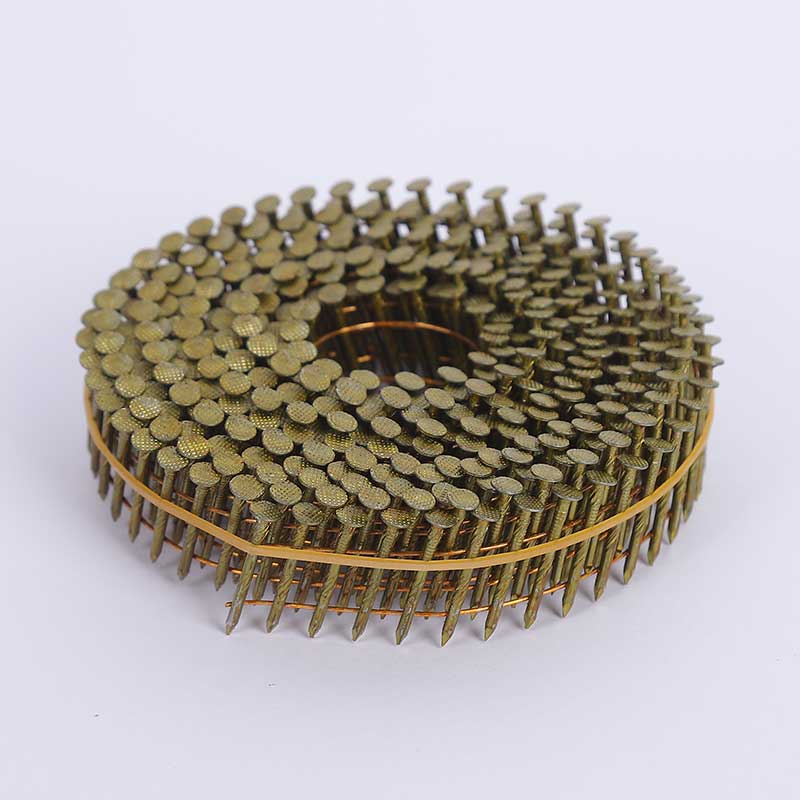
Use the coil nail specification sheet guide to reconcile product names with dimensions and finish. For the coil nail withdrawal test, add the actual penetration into the tested member, not just overall nail length. Record whether the tested pieces were supplied as representative production samples or selected separately.
| Report detail | Question to resolve | Comparison consequence |
|---|---|---|
| Nail identity | Same drawing, finish, and sample lot? | Different specifications cannot isolate a single design feature |
| Wood specimen | Same material, grain orientation, and condition? | Different substrates limit a direct supplier ranking |
| Penetration | Same measured embedment in the tested member? | Overall nail length alone is insufficient |
| Loading and timing | Same method and conditioning history? | Results may describe different test conditions |
| Reported result | Same unit, specimen basis, and statistic? | A largest observation is not interchangeable with a mean |
Read the Units and the Statistical Basis
Before comparing a coil nail withdrawal test figure, retain its original unit and add a separate converted value. One kilonewton equals 1,000 newtons, consistent with the NIST explanation of SI prefixes. For illustration only, 1.20 kN and 1,200 N express the same force. These numbers are a conversion example, not measured nail performance.
A value in N/mm is not simply another unit for the same force; it includes a length denominator. Ask what length was used and why. Likewise, a column labeled kg needs clarification because kilograms describe mass, not force. Do not silently interpret an ambiguous label as kilogram-force.
In a coil nail withdrawal test report, distinguish the peak reached by each specimen from the mean of those peaks and from the single highest observation. Request specimen count and individual results alongside the summary. Without them, purchasing cannot tell whether a headline figure describes typical observations or an unusually high one.
Keep excluded or invalid results identifiable, with the laboratory’s stated reasons. Do not remove low values merely to improve the average. When two summaries appear close, ask the technical reviewer to assess the spread and comparability rather than declaring a winner from rounded numbers.
Check the Time Between Installation and Testing
The USDA Wood Handbook chapter on fastenings describes how moisture changes and time in the wood can affect withdrawal behavior. A coil nail withdrawal test soon after driving therefore does not automatically represent performance after drying, storage, or repeated moisture changes.
Ask for the installation date, test date, and conditioning record relevant to the reported samples. If a coil nail withdrawal test is intended to support a comparison after storage, make that objective explicit before commissioning the work. Do not relabel an immediate test as an aged-performance result because the fastener itself came from an older carton.
Keep Failure Observations Attached to the Numbers
The coil nail withdrawal test record should make unusual events easy to find. Request specimen-level notes and photographs for splitting, fastener breakage, grip movement, or other events the laboratory observed. Ask the laboratory to explain their treatment under the selected method instead of assigning your own pass or fail after seeing the result.
In a coil nail withdrawal test, a note such as sample failed is not enough to explain what the reported load represents. Ask whether the intended withdrawal measurement was completed and whether the result belongs in the stated comparison. Preserve the laboratory’s interpretation with the data so a later buyer does not separate the number from its limitations.
Make a Purchasing Decision Without Inventing a Load Rating
Close the coil nail withdrawal test review with one of three documented outcomes: the reports support the intended comparison, missing information prevents a decision, or a matched test program is needed. Record the unresolved items and the person responsible for technical acceptance. A missing page is a request for clarification, not proof that a nail is defective.

The Wood Handbook separates short-duration maximum withdrawal loads from design loads, which require consideration of variability, load duration, and safety. Do not turn a coil nail withdrawal test peak into a safe working load by choosing an arbitrary divisor. Structural or load-rated applications require the applicable design process and a qualified technical review.
A favorable laboratory comparison also leaves production feeding and driving to be checked separately. The screw-shank changeover guide addresses that installation review. Keep the coil nail withdrawal test report linked to the approved drawing, sample identity, and decision instead of treating it as approval of every superficially similar coil.
For Yizhengyu’s coated coil nail range, send the intended wood, application, nail drawing, and evidence requirements when requesting samples. Ask which documentation applies to the exact proposed specification. Agree the purpose of any coil nail withdrawal test before ordering it, so the resulting report answers the purchasing question you actually need resolved.
FAQ
Does a coil nail withdrawal test establish a safe working load?
Not on its own. A reported maximum test load is not an application-specific design value. Use the applicable design requirements and qualified technical review for structural or load-rated connections.
Can I compare kilonewtons with newtons?
Yes, after converting the units and confirming that both figures describe the same quantity and specimen basis. One kilonewton equals 1,000 newtons; equal units do not resolve different test conditions.
How should I read a coil nail withdrawal test average?
Confirm which individual results were included and how the summary was calculated. Request specimen count and individual values. A mean of specimen peaks is not the same as the single highest observation.
Why does wood condition matter in a coil nail withdrawal test?
The measured response involves both the nail and the wood. Record material and conditioning details so differences between reports are not incorrectly attributed only to the fastener.
What if a coil nail withdrawal test omits penetration depth?
Ask the laboratory or supplier for the missing specimen detail before ranking the results. Overall nail length does not identify how much of the nail was embedded in the tested member.