Table of Contents
An order that says only “8d nails” leaves an important question unanswered: which nail type? A common nail size chart helps identify the intended dimensions, but the penny designation must stay attached to the product type. Otherwise, a buyer can receive a different diameter or length while the carton still carries the requested number.
This common nail size chart is a reference for purchasers comparing conventional common steel wire nails with metric listings. It is not a fastening schedule, a load-capacity table, or a statement that every listed size is available from Yizhengyu. Confirm the actual product drawing and application requirements before approving an order.
Common Nail Size Chart: Selected Sizes From 6d to 20d
The inch dimensions below follow the common-nail entries in American Wood Council 2018 NDS Appendix Table L4. Millimeter values are conversions, rounded to two decimal places where needed. This dated reference identifies dimensions; use the standards edition required by your project for compliance.
| Penny size | Length: in (mm) | Shank diameter: in (mm) |
|---|---|---|
| 6d | 2 (50.80) | 0.113 (2.87) |
| 8d | 2-1/2 (63.50) | 0.131 (3.33) |
| 10d | 3 (76.20) | 0.148 (3.76) |
| 12d | 3-1/4 (82.55) | 0.148 (3.76) |
| 16d | 3-1/2 (88.90) | 0.162 (4.11) |
| 20d | 4 (101.60) | 0.192 (4.88) |
Treat the common nail size chart as an identification aid, not a complete purchase specification. It does not list head dimensions, manufacturing tolerances, material requirements, finish, or packaging. Those details still belong in the supplier’s confirmation and the approved order documents.
Why Common, Box, and Sinker Nails Are Different
The same AWC table lists different dimensions under the 8d designation. An 8d common nail is 2-1/2 inches long with a 0.131-inch shank. An 8d box nail has the same length but a 0.113-inch shank; an 8d sinker is 2-3/8 inches long with a 0.113-inch shank.
A common nail size chart therefore cannot justify accepting a box or sinker nail as an automatic substitute. Ask the supplier to state the type explicitly. If an alternative is proposed, route it through the project’s substitution review rather than silently changing the description on the order.
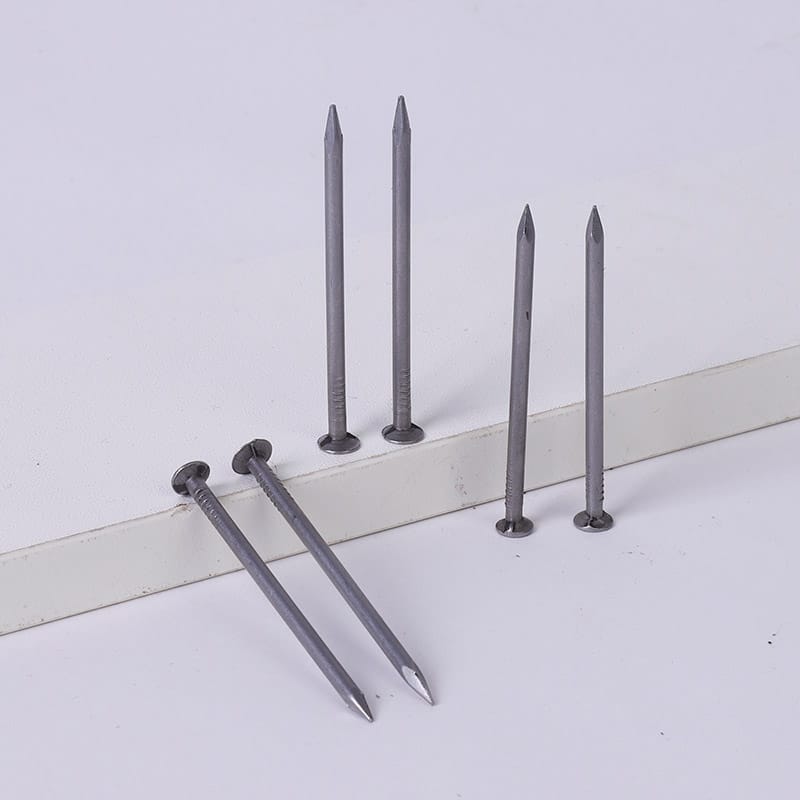
When comparing quotations, keep one line for the requested product and another for any offered alternative. Mark every unresolved field. The common nail size chart can expose a naming mismatch early, but it cannot decide whether the alternative is acceptable for the intended joint.
Convert Inches Without Inventing a Metric Equivalent
NIST defines one inch as exactly 25.4 millimeters. Multiply the inch value by 25.4 before rounding. For example, 0.131 inches converts to 3.3274 mm. The common nail size chart displays that value as 3.33 mm for readability, not as a newly specified manufacturing limit.
A 2-1/2-inch length converts to 63.5 mm. A listing rounded to 64 mm may be a catalog shorthand, or it may describe a separately specified product. Ask which it is. Do not use a common nail size chart to decide that close-looking nominal dimensions are interchangeable without the applicable tolerances and drawing.
Keep the governing unit visible on the purchase order. If the controlled drawing is in inches, label converted millimeter values as reference values. If the product is specified directly in millimeters, do not round it into a penny category merely to make the catalog easier to search.
Check the Sample Against the Complete Description
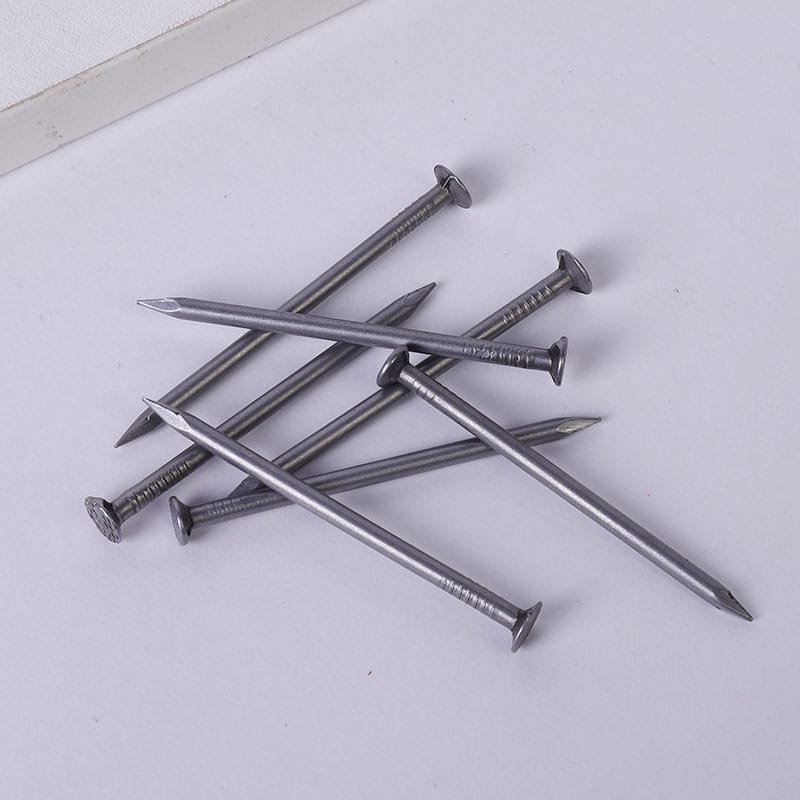
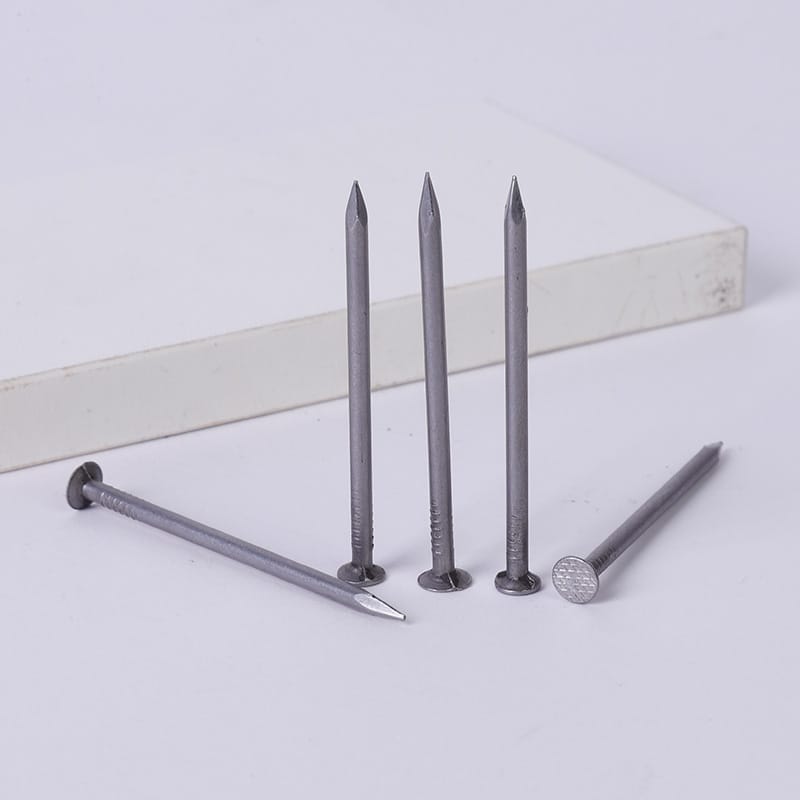
Use the common nail size chart to select a candidate row, then compare the sample with the approved drawing. Confirm where length is measured, which shank surface defines diameter, and what head and point forms are required. A familiar-looking head does not establish the nail’s dimensions or material.
Record the supplier item number and the sample’s carton or lot identification before measurements are taken. Keep photographs as identification records, not substitutes for dimensional readings. The common nail size chart should remain a reference alongside the drawing, rather than becoming the only acceptance document.
If the diameter or length does not match the requested item, ask whether the sample represents a different nail type, a metric product, or a labeling error. Resolve that question before discussing acceptance. Do not average different products together or accept a verbal assurance that all nails carrying the same penny designation are equivalent.
Do Not Transfer Loose-Nail Labels Directly to Coils
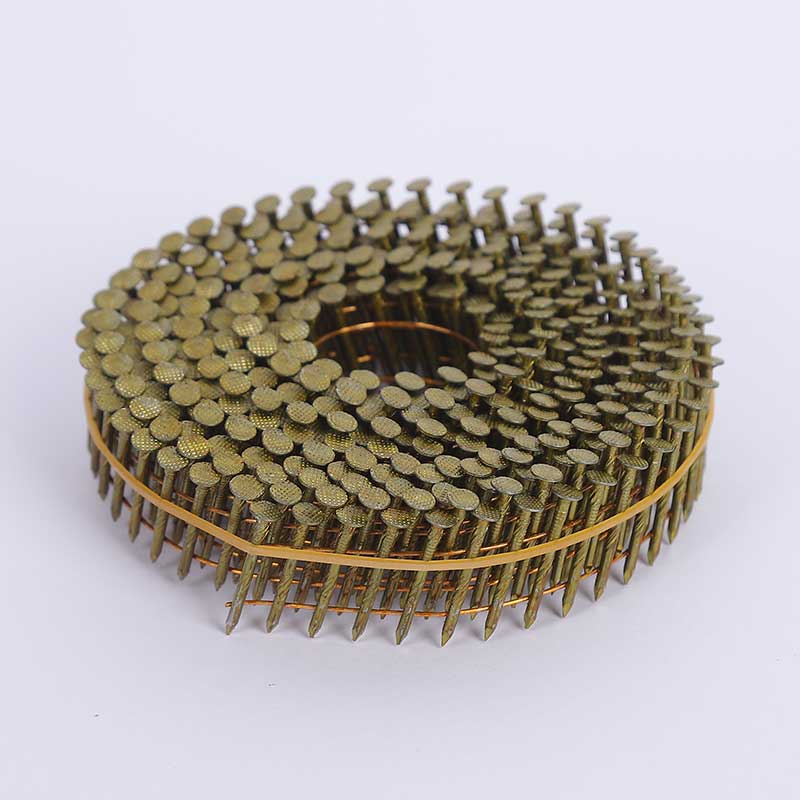
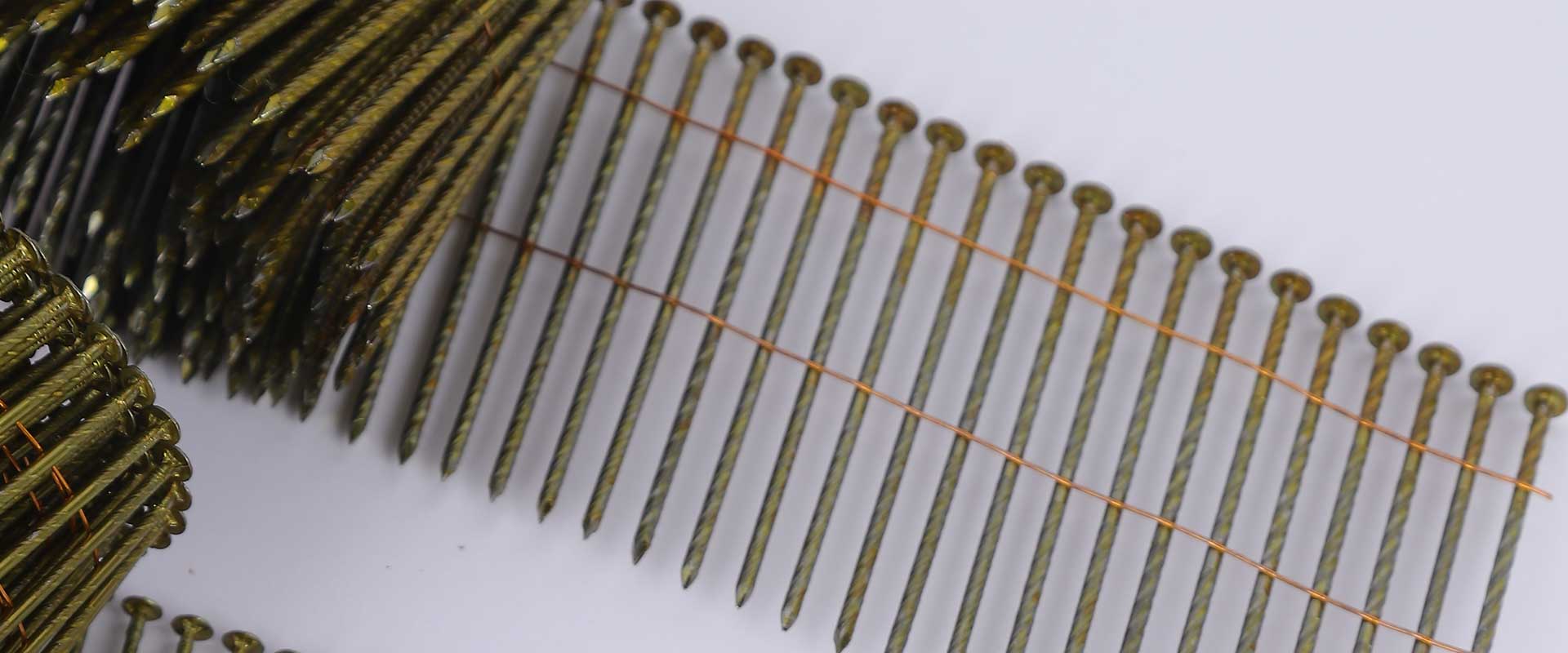
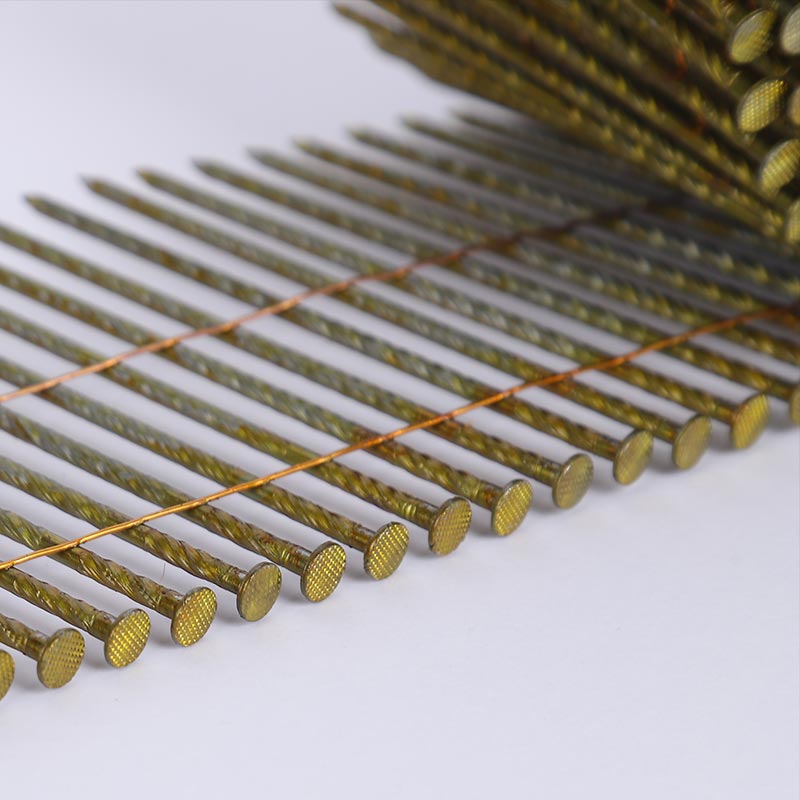
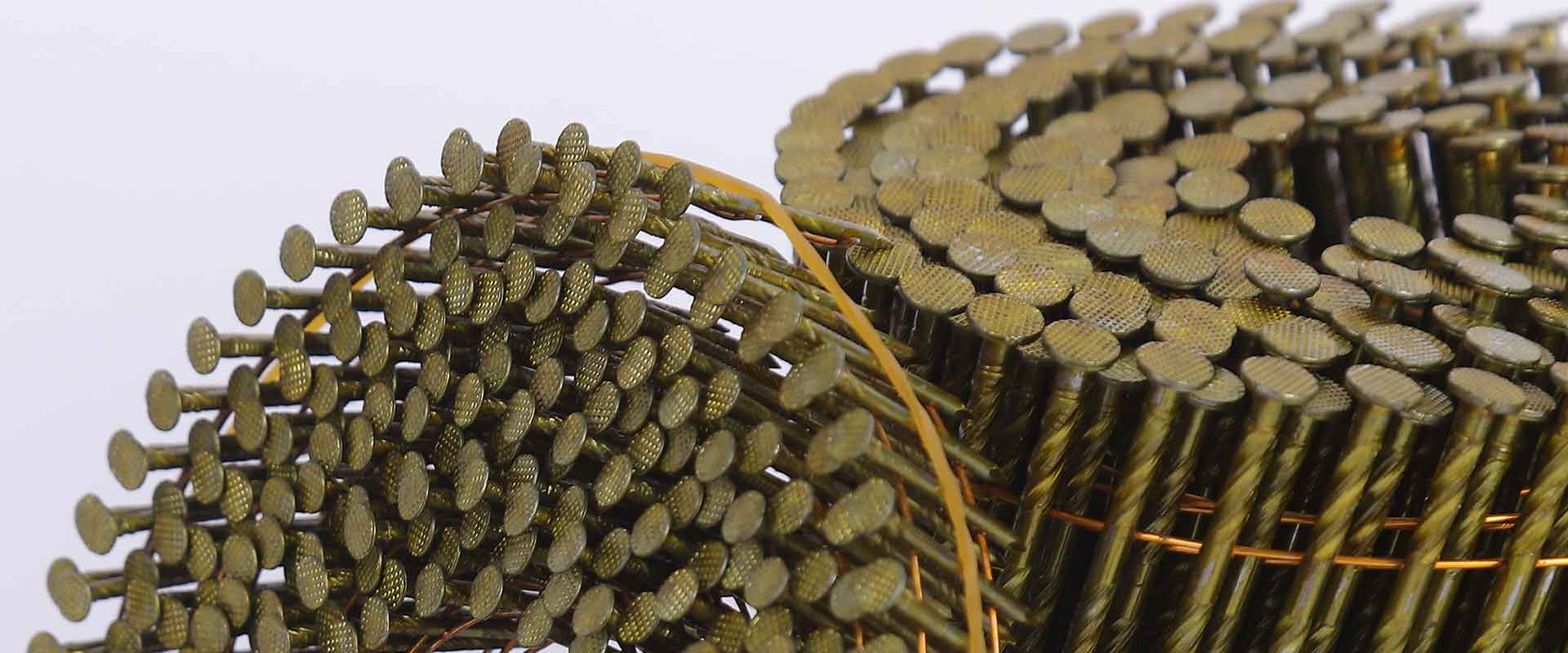
The common nail size chart does not specify a coil’s collation angle, wire position, nail spacing, winding geometry, or magazine fit. A loose nail dimension is only part of the information needed when the application uses a pneumatic coil nailer. Tool compatibility must be confirmed separately.
For a collated order, use the coil nail specification checklist to capture the additional fields. Do not assume that a common nail size chart row establishes compatibility with Yizhengyu’s coated coil nail range or any particular nailer model.
Keep Dimensional Identification Separate From Joint Design
A common nail size chart answers what dimensions a named product has; it does not answer how many nails a connection needs. The USDA Wood Handbook chapter on fastenings explains that joint design must account for wood properties and dimensional changes associated with moisture.
Use the applicable assembly instructions, fastening schedule, or engineering design to establish the required fastener. Do not choose penetration, edge distance, spacing, or a substitution solely from the common nail size chart. Where a connector or panel system has specific fastening requirements, retain those requirements in the purchasing record.
Likewise, a dimensional match does not prove suitability for treated wood or a wet service environment. Request the specified material and coating information separately. A finish description, sample photograph, and size label answer different questions; none should be used to stand in for the others.
Turn the Reference Into an Unambiguous Inquiry
After consulting the common nail size chart, write an inquiry that identifies the nail type, controlling dimensions and units, drawing or standard reference, head, point, shank form, material, finish, quantity basis, and packaging. Attach the application requirements and explain which details are mandatory rather than inviting an unmarked equivalent.
Yizhengyu’s woodworking nail product page currently lists a metric size marked M2.2 x 50 mm. Ask the supplier to clarify that notation and confirm the drawing; do not rename it 6d simply because 50 mm is close to two inches. A common nail size chart is useful precisely because it makes such assumptions visible.
Send the intended assembly and the dimensioned requirement with your inquiry, and request confirmation of available specifications and samples. Before release, align the quotation, approved sample, order, and carton description. Keep the common nail size chart as supporting reference while the agreed product specification controls what is supplied.
FAQ
Does a common nail size chart apply to every nail marked 8d?
No. Common, box, and sinker nails can carry the same penny designation while having different dimensions. Identify the nail type and compare the actual specification before accepting a substitute.
Are converted millimeter dimensions manufacturing tolerances?
No. Conversion changes units, not the acceptance limits. Rounded metric values in a reference table do not establish a permitted variation or replace the governing drawing.
Can I use a common nail size chart to select coil nails?
Only as limited dimensional background. A collated product also needs the correct head, shank, collation geometry, and tool compatibility. A matching length does not prove that the coil will feed or suit the application.
Does a longer nail always mean a thicker shank?
Do not infer one dimension from another. Read both fields for the exact product type, then confirm them against the supplier drawing. Length alone is not a complete size specification.
Does the common nail size chart show Yizhengyu stock availability?
No. It is a dimensional reference, not a stock list or certification statement. Send the required type, dimensions, finish, application, and quantity to request confirmation of the available product specification.